
 EN
EN


In industrial assembly, automotive maintenance, equipment servicing, and precision mechanical work, tool compatibility directly affects operational efficiency and fastening accuracy. While sockets, ratchets, and screwdriver bits often receive most of the attention, the 1/4 inch socket adaptor plays an equally important role in ensuring stable torque transmission and flexible tool conversion.
A poorly manufactured adaptor may seem like a small issue, but under continuous industrial use it can create serious problems including bit slippage, torque loss, premature wear, and even fastener damage.
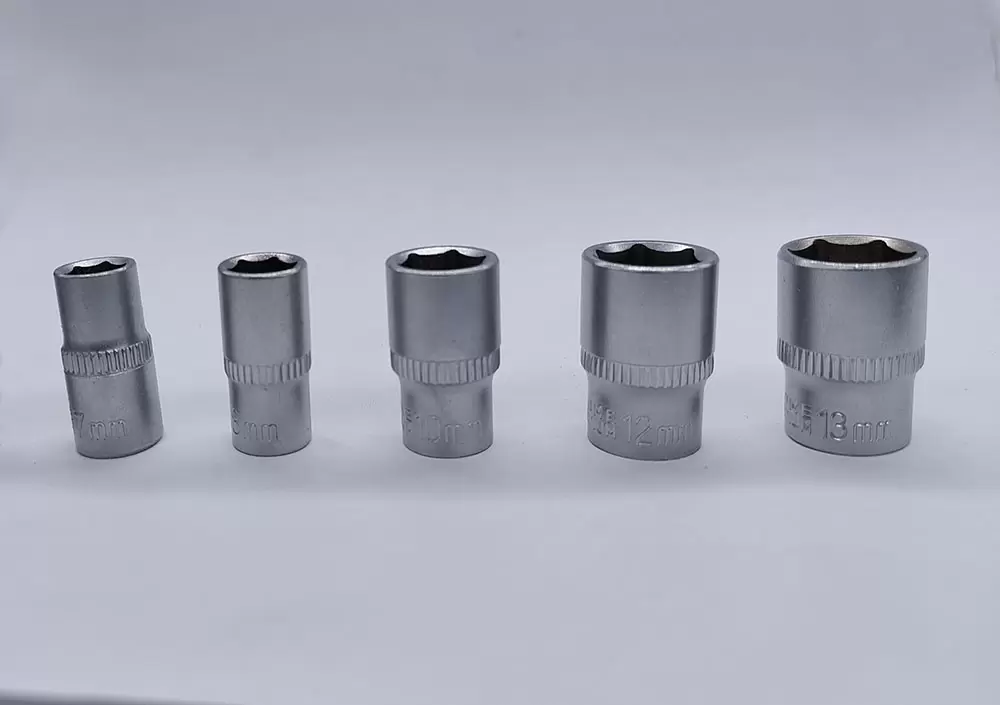
As modern assembly environments increasingly depend on power tools, quick-change systems, and multi-function tool platforms, high-precision socket adaptors have become critical components in professional fastening applications.
Shangfeng Machinery Co., Ltd. specializes in screwdriver bits, socket tools, ratchet screwdrivers, quick-change systems, and precision tool accessories. By adopting Taiwan cold forging technology and manufacturing products according to DIN and ANSI standards, the company focuses on improving both dimensional accuracy and long-term durability in industrial fastening tools.
Why Socket Adaptors Matter More Than Many Users Expect
A 1/4 inch socket adaptor acts as the connection interface between different drive systems.
It allows compatibility between:
- Hex shank drivers
- Socket wrenches
- Power drills
- Impact drivers
- Ratchet systems
- Torque tools
Although structurally simple, the adaptor directly influences torque transmission efficiency and connection stability.
Under repeated high-load fastening operations, low-quality adaptors may experience:
- Rounded corners
- Drive deformation
- Excessive runout
- Surface cracking
- Connection looseness
These failures reduce fastening precision and may damage both tools and fasteners.
In automated assembly or maintenance-intensive environments, adaptor reliability becomes increasingly important.
Material Selection Determines Torque Capacity
Industrial fastening tools experience repeated torsional stress during operation.
For a 1/4 inch socket adaptor, material strength directly affects load-bearing capability and fatigue resistance.
High-quality adaptors commonly use:
- S2 alloy steel
- Chrome vanadium steel
- Hardened alloy steel
Proper heat treatment improves:
- Torsional strength
- Impact resistance
- Wear resistance
- Fatigue lifespan
Industrial-grade socket adaptors often reach hardness levels between HRC58–62 depending on application requirements.
If hardness is too low, the adaptor may deform under heavy torque. If hardness is excessively high without sufficient toughness, brittleness and cracking risks increase.
Balancing hardness and toughness is essential for long-term durability.
Cold Forging Improves Structural Integrity
Manufacturing process quality significantly affects adaptor performance.
Compared with conventional machining, cold forging technology improves metal grain flow and structural density.
Advantages of cold-forged socket adaptors include:
- Higher strength consistency
- Better impact resistance
- Improved dimensional accuracy
- Reduced internal defects
- Longer service life
Shangfeng Machinery adopts Taiwan cold forging technology to improve precision and mechanical stability across fastening tool products.
In high-frequency industrial applications, structural consistency becomes critical for maintaining stable performance.
Precision Tolerance Reduces Tool Vibration
Socket adaptors must maintain precise dimensional tolerance to ensure secure fit between drive systems.
Poor tolerance control may cause:
- Bit wobble
- Torque loss
- Socket disengagement
- Increased vibration
- Fastener damage
High-precision adaptors manufactured according to DIN and ANSI standards improve connection accuracy across different tool systems.
This is particularly important in:
- Automotive assembly
- Industrial maintenance
- CNC equipment servicing
- Aerospace fastening
- Electrical installation work
Stable connection geometry helps maintain fastening consistency while reducing operator fatigue.
Quick-Change Compatibility Improves Productivity
Modern industrial environments increasingly rely on quick-change tooling systems.
A high-quality 1/4 inch socket adaptor supports rapid switching between:
- Screwdriver bits
- Nut drivers
- Socket heads
- Extension tools
This reduces downtime during repetitive assembly operations.
In production lines and maintenance environments, quick-change compatibility directly improves workflow efficiency and reduces unnecessary tool handling.
Magnetic retention systems and locking ball mechanisms further enhance operational convenience and fastening stability.
Impact Resistance Is Critical for Power Tool Applications
Many industrial users now combine socket adaptors with impact drivers and high-speed electric tools.
Under impact operation, the adaptor experiences repeated dynamic loading conditions.
Industrial-grade adaptors designed for impact use require:
- Reinforced torsional strength
- Anti-crack design
- Shock absorption capability
- Stable drive engagement
Low-quality adaptors often fail prematurely under continuous impact operation because of insufficient material density or improper heat treatment.
Impact-rated adaptors help extend both tool lifespan and fastening reliability.
Corrosion Resistance Extends Service Life
Industrial tools frequently operate in environments exposed to:
- Moisture
- Oil
- Dust
- Chemicals
- Outdoor weather conditions
Protective surface treatments improve corrosion resistance and maintain dimensional stability over time.
Common industrial coatings include:
- Black phosphate coating
- Nickel plating
- Chrome plating
- Anti-rust surface treatment
These coatings also reduce surface wear during repeated tool insertion and removal.
Global Standard Compatibility Supports International Applications
Fastening tools used in global markets must maintain compatibility with international tooling systems.
Socket adaptors manufactured according to DIN and ANSI standards ensure reliable interchangeability across:
- European tools
- American fastening systems
- Asian industrial equipment
This becomes increasingly important for export-oriented industries and multinational manufacturing operations.
Standardized dimensions also improve compatibility with automated tool systems and torque-controlled assembly equipment.
Final Thoughts
The 1/4 inch socket adaptor may appear to be a small accessory, but it plays a critical role in fastening precision, torque transmission, and tool system compatibility.
High-quality industrial adaptors provide advantages in:
- Torque reliability
- Structural durability
- Impact resistance
- Dimensional accuracy
- Quick-change efficiency
- Long-term wear resistance
As industrial assembly systems continue evolving toward higher automation and faster production speeds, precision fastening accessories like socket adaptors will remain essential for maintaining operational efficiency and fastening consistency.