
 EN
EN


In high-frequency fastening environments such as construction, manufacturing, and equipment assembly, the nut setter for power drills plays a decisive role in operational efficiency and fastening quality. As power tools become more powerful and work cycles become more intensive, the mechanical demands placed on nut setters have increased significantly.
A modern nut setter is expected to deliver consistent torque transmission, high fatigue resistance, and long service life while maintaining compatibility with multiple drill systems and fastener types.
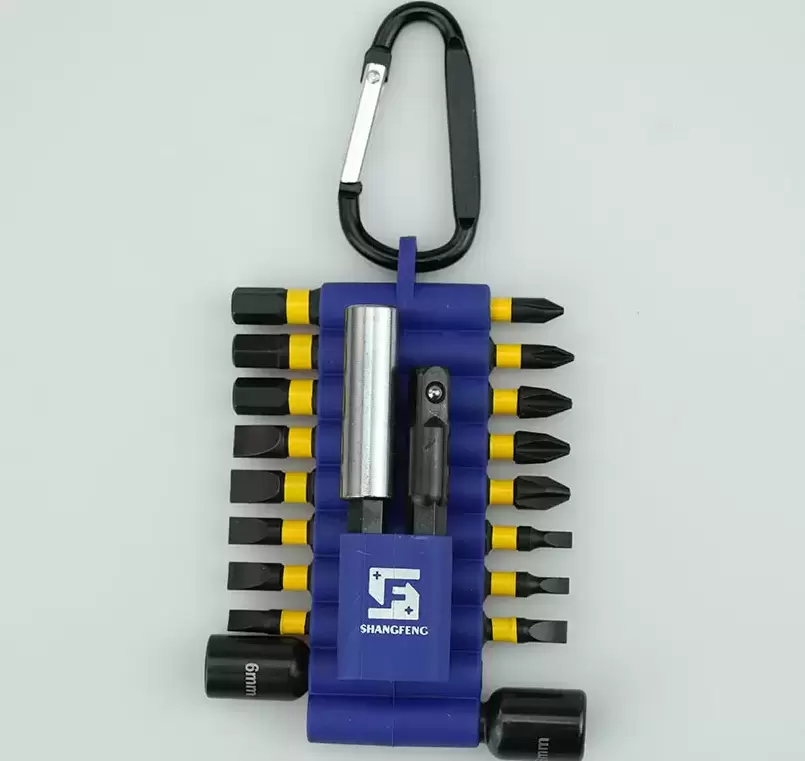
High-Frequency Load Conditions in Industrial Applications
Industrial fastening operations often involve continuous torque application under variable load conditions.
Typical working parameters include:
- rotational speed: 1,000–2,500 RPM
- torque range: 10–120 Nm depending on application
- daily fastening cycles: 1,000–10,000 operations
- impact frequency: high in pulse or hammer drill modes
Under such conditions, nut setters must maintain structural stability without deformation or internal wear.
Repeated torque fluctuations create:
- micro-cracks in low-quality tool steel
- socket deformation under repeated stress
- loss of dimensional accuracy over time
Cold Forging Technology and Structural Integrity
Shangfeng Machinery Co., Ltd. utilizes Taiwan cold forging technology to manufacture high-performance nut setters for power drills.
Compared with traditional machining methods, cold forging provides:
- improved grain flow alignment
- higher material density
- enhanced fatigue resistance
- reduced internal structural defects
This results in tools capable of withstanding repeated high-torque cycles without structural degradation.
Mechanical benefits include:
- increased torsional strength
- improved impact resistance
- longer operational lifespan under heavy-duty use
Heat Treatment and Hardness Control
Heat treatment is a critical process in determining the durability of a nut setter.
Typical hardness specifications:
- working surface hardness: HRC 50–58
- core toughness optimized for impact absorption
- uniform hardness distribution across socket body
Improper heat treatment can lead to:
- brittle fracture under impact load
- premature socket wear
- deformation under high torque
Controlled heat treatment cycles ensure a balance between hardness and toughness, enabling long-term stability under industrial operating conditions.
Precision Socket Geometry and Torque Stability
The internal geometry of the nut setter for power drills directly affects fastening precision and torque transmission efficiency.
Key design parameters include:
- hex tolerance: ±0.02 mm
- socket depth optimization for fastener stability
- chamfer angle designed for smooth insertion
- concentricity control for rotational balance
Even minor geometric inconsistencies can lead to:
- fastener rounding
- torque loss during operation
- increased vibration in drill systems
Precision engineering ensures consistent engagement between tool and fastener across repeated cycles.
Wear Resistance and Surface Engineering
Surface durability is essential in high-frequency fastening environments.
Common surface treatments include:
- black oxide for basic corrosion resistance
- phosphate coating for enhanced wear resistance
- nickel plating for high-humidity environments
These coatings provide:
- reduced friction during fastening
- improved resistance to rust and oxidation
- extended service life in outdoor conditions
In industrial environments, tools may be exposed to dust, moisture, and chemical residues, making surface protection a key performance factor.
Anti-Cam-Out Performance and Load Distribution
Cam-out is one of the most critical failure modes in nut setter applications. It occurs when the tool slips out of the fastener under torque load.
To reduce cam-out risk, modern designs incorporate:
- optimized internal hex engagement depth
- uniform load distribution across socket walls
- reinforced edge geometry to prevent rounding
- precision-machined contact surfaces
These improvements ensure stable torque transfer even under high-load impact conditions.
Compatibility Across Power Tool Systems
A high-quality nut setter for power drills must maintain compatibility across a wide range of tools, including:
- standard electric drills
- impact drivers
- pneumatic fastening tools
- quick-change chuck systems
Key compatibility requirements:
- secure shank retention under vibration
- minimal runout during high-speed rotation (≤0.1 mm)
- stable magnetic or mechanical fastener holding
This ensures versatility across multiple industrial environments.
Fatigue Resistance and Lifecycle Performance
Long-term durability is a key requirement in industrial procurement decisions.
Nut setters are evaluated based on:
- cycle life under continuous torque loading
- resistance to micro-crack formation
- structural stability under repeated impact stress
High-performance tools typically achieve:
- 10,000–50,000 operational cycles depending on usage conditions
- stable torque transmission throughout lifecycle
- minimal dimensional degradation over time
Industrial Application Scenarios
Nut setters are widely used in:
- construction and steel framing systems
- HVAC installation and maintenance
- automotive assembly lines
- electrical equipment installation
- furniture and modular assembly systems
Each scenario imposes different stress profiles, requiring optimized tool geometry and material selection.
Conclusion
The nut setter for power drills is a critical component in industrial fastening systems, where performance reliability directly affects productivity and assembly quality.
Its core engineering advantages include:
- cold forged structural strength
- precision-controlled socket geometry
- optimized heat treatment for hardness balance
- advanced surface protection systems
- high fatigue resistance under continuous load
Through advanced manufacturing processes and strict dimensional control, modern nut setters are evolving into high-durability precision tools capable of meeting the demands of global industrial fastening applications.