
 EN
EN


Choosing the correct fastening accessory is essential for ensuring tool performance, assembly efficiency, and long-term operational reliability. In both industrial manufacturing and automotive maintenance environments, the 1/4 inch socket adaptor serves as a critical connection component between sockets, bits, ratchets, and power tools.
Although compact in size, adaptor quality directly affects torque transfer stability, fastening precision, and tool lifespan.
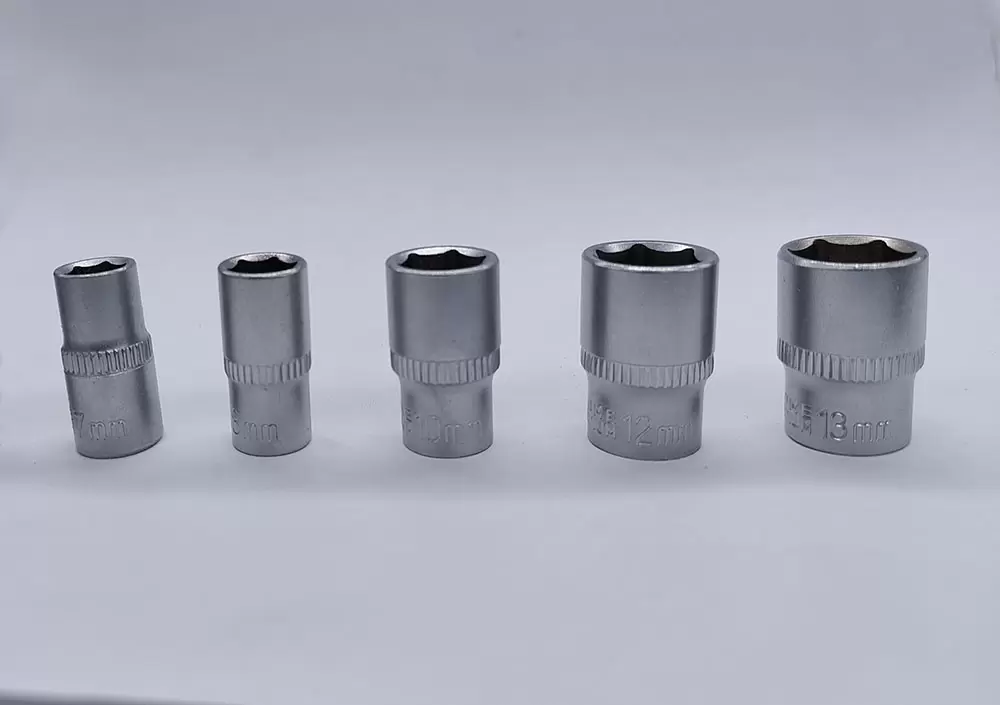
Many tool failures that appear to originate from sockets or drivers are actually caused by low-quality adaptors with poor material strength, loose tolerance control, or insufficient heat treatment.
For professional assembly environments, selecting the right adaptor requires evaluating much more than simple size compatibility.
Understand the Difference Between Manual and Impact Applications
One of the most common purchasing mistakes is using standard adaptors in high-impact power tool environments.
Manual fastening applications generally involve:
- Ratchet screwdrivers
- Hand wrenches
- Low-speed assembly tools
Impact applications involve:
- Impact drivers
- Pneumatic tools
- Electric impact wrenches
- High-frequency assembly systems
Impact-rated adaptors require significantly higher torsional strength because of repeated shock loading.
Compared with standard adaptors, impact-grade versions usually feature:
- Reinforced alloy steel
- Improved heat treatment
- Thicker structural design
- Better fatigue resistance
Using non-impact adaptors under impact conditions may result in sudden fracture or premature deformation.
Material Quality Determines Long-Term Durability
Industrial fastening operations often involve thousands of repetitive cycles every day.
Adaptor material quality directly affects:
- Wear resistance
- Torsional stability
- Crack resistance
- Fatigue lifespan
High-performance 1/4 inch socket adaptors commonly use:
- S2 steel
- Chrome molybdenum steel
- Chrome vanadium steel
Heat treatment consistency is equally important.
Poor heat treatment may create uneven hardness distribution, increasing risks of deformation or brittleness under load.
Professional-grade adaptors maintain stable hardness and structural integrity even under continuous industrial operation.
Precision Manufacturing Reduces Fastener Damage
Socket adaptor dimensional accuracy directly affects fastening stability.
Loose-fitting adaptors may cause:
- Socket slippage
- Fastener rounding
- Torque inconsistency
- Excessive vibration
High-precision manufacturing improves engagement stability between:
- Hex shanks
- Square drives
- Socket heads
- Quick-change holders
Shangfeng Machinery manufactures fastening accessories according to DIN and ANSI standards while using precision automated production and inspection systems to improve dimensional consistency.
For automated production lines and precision maintenance environments, tolerance accuracy is critical.
Magnetic and Locking Systems Improve Operational Efficiency
Modern fastening environments increasingly prioritize fast tool replacement and operational convenience.
Common adaptor retention systems include:
- Magnetic holding
- Spring ball locking
- Quick-release structures
Magnetic adaptors help stabilize screws and sockets during overhead or confined-space operations.
Ball-lock systems improve socket retention under vibration and repeated movement conditions.
These features become especially useful in:
- Automotive repair
- Equipment installation
- Electrical assembly
- Maintenance servicing
Reducing accidental socket drops improves both efficiency and workplace safety.
Corrosion Protection Matters in Industrial Environments
Fastening tools frequently operate in harsh industrial conditions involving:
- Humidity
- Lubricants
- Dust
- Outdoor exposure
- Chemical contamination
Corrosion-resistant coatings help extend adaptor service life while maintaining dimensional precision.
Industrial surface treatment options commonly include:
- Black oxide coating
- Nickel plating
- Phosphate treatment
- Chrome finishing
High-quality coatings also reduce friction wear between mating tool surfaces.
Compact Design Supports Tight-Space Operations
One major advantage of 1/4 inch socket adaptors is their compatibility with compact fastening systems.
In narrow installation environments such as:
- Automotive engine compartments
- Industrial control cabinets
- Electrical systems
- Precision equipment assembly
compact adaptors improve accessibility while maintaining adequate torque transfer capability.
Short-profile adaptors also reduce rotational clearance requirements in confined working spaces.
Tool Compatibility Improves Inventory Flexibility
Industrial users increasingly prefer modular tool systems capable of supporting multiple applications.
A properly designed 1/4 inch socket adaptor improves compatibility across:
- Manual ratchets
- Electric drills
- Screwdriver handles
- Quick-change systems
- Torque drivers
This reduces the need for separate dedicated tools and improves overall inventory flexibility.
For maintenance teams and assembly operations, modular compatibility helps reduce tool management complexity.
Certification and Manufacturing Standards Matter
Not all fastening accessories meet industrial-grade quality standards.
Reliable manufacturers maintain:
- Precision inspection systems
- Standardized production processes
- Hardness testing procedures
- Torque testing verification
Shangfeng Machinery uses advanced automated tool manufacturing equipment and precision testing systems to maintain stable quality across screwdriver bits, socket adaptors, and fastening accessories.
Products manufactured according to DIN and ANSI standards provide more reliable global compatibility and performance consistency.
Final Thoughts
Selecting the right 1/4 inch socket adaptor requires evaluating far more than drive size alone.
High-quality industrial adaptors improve:
- Torque transmission stability
- Tool compatibility
- Impact resistance
- Fastening precision
- Long-term durability
- Operational efficiency
As industrial assembly and maintenance environments continue demanding faster production and higher precision, reliable socket adaptor performance will remain essential for maintaining consistent fastening quality and reducing long-term operational cost.