
 EN
EN


In industrial assembly, equipment maintenance, automotive repair, and production-line fastening operations, productivity often depends on how efficiently tools can adapt to different fastening requirements. While attention is frequently focused on power tools, sockets, and fasteners, one small component can have a surprisingly large impact on overall performance: the 1/4 inch socket adaptor.
A socket adaptor serves as the connection point between drive tools and sockets, enabling users to switch quickly between fastening tasks without changing entire tool systems. Although compact in size, it must withstand continuous torque transmission, repetitive load cycles, and frequent insertion and removal. When the adaptor is poorly manufactured, it often becomes the weakest link in the fastening process, leading to premature wear, slippage, reduced efficiency, and unexpected downtime.
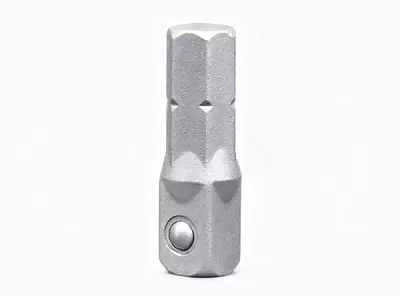
As industrial users demand higher productivity and longer tool life, the quality of the 1/4 inch socket adaptor has become an important factor in achieving reliable fastening performance.
The Growing Demand for Versatile Fastening Solutions
Modern manufacturing environments rarely rely on a single fastening specification. A production line may require operators to handle different bolt sizes, screw types, and assembly positions throughout a shift. Maintenance technicians often face the same challenge when servicing machinery, electrical systems, or transportation equipment.
The 1/4 inch socket adaptor addresses this challenge by creating compatibility between screwdriver bits, bit holders, ratchets, and socket systems. Instead of carrying multiple specialized tools, users can expand the functionality of existing equipment through a simple adaptor.
This flexibility becomes especially valuable in environments where speed matters. Reducing tool changes can shorten assembly cycles, improve workflow efficiency, and minimize interruptions during maintenance operations.
However, the adaptor can only deliver these benefits if it is engineered to maintain dimensional accuracy and mechanical strength under continuous use.
Material Quality Determines Service Life
One of the most important factors affecting adaptor performance is material selection.
Industrial-grade 1/4 inch socket adaptors are typically manufactured from high-strength alloy steels such as S2 steel, chrome vanadium steel, or chrome molybdenum steel. These materials provide the combination of hardness and toughness required for repeated torque transmission.
During fastening operations, the adaptor experiences concentrated stress at both the drive interface and the socket connection points. Inferior materials may initially appear functional but often begin to deform after repeated use. Small dimensional changes can create excessive play between components, resulting in reduced torque transfer efficiency and increased wear.
High-quality alloy steel adaptors maintain structural integrity even after thousands of fastening cycles. This not only extends tool life but also protects connected sockets and power tools from unnecessary damage.
Manufacturers such as Shangfeng Machinery utilize advanced cold-forging processes to optimize grain structure and improve mechanical properties. Compared with conventional machining methods, cold forging enhances strength while maintaining consistent dimensional accuracy.
Precision Manufacturing Improves Torque Transmission
Torque transmission efficiency depends heavily on manufacturing precision.
Even a slight dimensional deviation can affect how securely the adaptor engages with sockets and drive tools. Excessive clearance creates backlash during operation, reducing efficiency and accelerating wear. In high-torque applications, poor fitment may even cause rounding of corners or sudden disengagement.
To address these issues, professional manufacturers produce adaptors according to internationally recognized standards such as DIN and ANSI specifications. Precision grinding, CNC finishing, and high-accuracy inspection equipment help ensure that critical dimensions remain within tight tolerances.
The result is a secure connection that transfers torque more effectively while minimizing energy loss and component wear.
In industrial environments where fastening consistency directly affects product quality, this level of precision provides measurable operational benefits.
Heat Treatment Plays a Critical Role
Material selection alone does not determine performance. Heat treatment is equally important.
A properly heat-treated adaptor combines a wear-resistant surface with a tough internal structure. This balance allows the component to resist deformation while absorbing shock loads generated during operation.
For example, an adaptor used with impact drivers experiences rapid torque fluctuations and repetitive stress cycles. If the material is excessively hard, it may crack under impact. If it is too soft, the drive surfaces may wear prematurely.
Controlled hardening and tempering processes create the optimal balance between hardness and toughness. This is one reason why industrial users often prefer products from manufacturers that maintain strict quality control throughout production.
The difference becomes particularly noticeable in high-frequency applications where tool reliability directly influences productivity.
Reducing Downtime Through Better Tool Components
Downtime is one of the most expensive hidden costs in industrial operations.
When a low-quality adaptor fails, the immediate replacement cost is usually insignificant compared with the lost production time, maintenance delays, and potential damage to connected tools. A failed adaptor can interrupt an entire workflow, especially when replacement parts are not immediately available.
Investing in a durable 1/4 inch socket adaptor helps reduce these risks. Longer service life means fewer replacements, while better dimensional stability improves overall system reliability.
For companies managing large fleets of tools or maintaining extensive equipment networks, these small improvements can generate significant savings over time.
Choosing the Right Adaptor for the Application
Not every fastening task requires the same adaptor design.
Standard manual fastening applications may perform well with traditional alloy steel adaptors. Impact applications, however, often require chrome molybdenum construction and specialized designs capable of handling higher shock loads.
Users should also consider factors such as drive compatibility, corrosion resistance, surface treatment quality, and manufacturing standards. Adapters designed according to DIN and ANSI specifications generally offer better compatibility with internationally sourced sockets and tooling systems.
Evaluating these technical details before purchase can prevent compatibility issues and improve long-term operational performance.
Conclusion
Although it is often viewed as a simple accessory, the 1/4 inch socket adaptor plays a critical role in modern fastening systems. Its ability to transfer torque efficiently, maintain dimensional accuracy, and withstand continuous use directly influences tool performance and operational reliability.
High-quality materials, precision manufacturing, advanced heat treatment, and compliance with international standards all contribute to a longer service life and more consistent fastening results.
As assembly and maintenance operations continue to demand greater efficiency, selecting a reliable 1/4 inch socket adaptor is not merely a tooling decision—it is an investment in productivity, durability, and long-term cost control.