
 EN
EN


In high-intensity fastening environments, tool failure is rarely sudden; it is the result of progressive fatigue accumulation, micro-deformation, and material degradation under repeated torque loading. The phillips impact bit is specifically designed to counter these failure mechanisms through optimized metallurgy, precision manufacturing, and controlled mechanical behavior under dynamic load conditions.
Understanding how these factors interact is essential for improving assembly reliability in industrial production systems where thousands of fastening cycles occur daily.
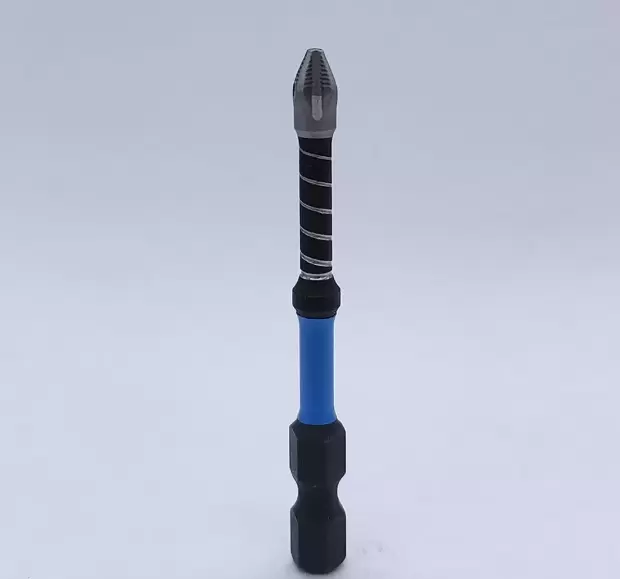
Fatigue mechanics in impact-driven fastening systems
Impact drivers subject tools to repeated torsional shock loads rather than steady torque application. Each impact cycle introduces micro-strain within the bit’s internal structure, particularly at the tip engagement zone where stress concentration is highest.
Over time, this leads to fatigue crack initiation, typically originating at microscopic surface defects or grain boundary discontinuities. Once initiated, crack propagation accelerates rapidly under cyclic loading conditions exceeding 2,000 IPM.
A high-performance phillips impact bit is designed to delay this fatigue threshold by improving material homogeneity and reducing stress concentration points through controlled forging and heat treatment processes.
Cold forging and grain flow reinforcement
One of the most critical manufacturing advantages in industrial-grade impact bits is cold forging. Unlike machining processes that cut through material grain structures, cold forging reshapes steel under high pressure, aligning grain flow along the direction of force transmission.
Shangfeng Machinery Co.; Ltd. applies Taiwan-based cold forging techniques to ensure continuous grain alignment from shank to tip. This structural continuity significantly enhances torsional strength and fatigue resistance.
In comparative fatigue testing, cold-forged S2 steel bits typically demonstrate 25–40% higher cycle life than machined equivalents under identical torque conditions.
Heat treatment and dual-phase hardness structure
After forging, heat treatment defines the final mechanical properties of the phillips impact bit. The goal is to achieve a dual-phase structure: a hardened surface layer resistant to wear and a ductile core capable of absorbing impact energy.
Typical hardness profiles range from 60 HRC at the surface to approximately 45–50 HRC in the core region. This gradient prevents brittle fracture while maintaining sufficient surface durability for repeated engagement with steel or hardened screws.
Improper heat treatment can lead to either excessive brittleness or premature deformation, both of which significantly reduce tool lifespan in impact applications.
Precision grinding and tip engagement accuracy
The functional performance of a phillips impact bit depends heavily on tip geometry accuracy. The interface between bit and screw recess must ensure maximum contact area while minimizing radial slippage under torque load.
Industrial production standards typically maintain tolerances within ±0.02 mm for critical engagement surfaces. CNC grinding systems equipped with automated optical inspection ensure that each batch meets strict dimensional consistency requirements.
Even minor deviations can increase cam-out probability, leading to screw head damage and reduced fastening reliability in automated assembly systems.
Coating technologies and friction management
Surface coatings play a significant role in managing frictional heat and wear. Black oxide coatings reduce surface friction and improve corrosion resistance, while titanium nitride coatings significantly enhance surface hardness and reduce galling effects during high-speed fastening cycles.
In industrial testing, TiN-coated phillips impact bits demonstrate up to 2.5 times improved wear resistance compared to untreated steel bits under continuous operation.
Reduced friction also improves energy transfer efficiency, allowing impact drivers to deliver more effective torque without excessive energy loss at the interface.
Industrial production consistency and quality control
For high-volume manufacturing environments, consistency across batches is as important as peak performance. Variations in hardness, geometry, or coating thickness can introduce variability in fastening results, particularly in automated systems.
Shangfeng Machinery integrates multi-stage inspection processes including hardness testing, torque resistance sampling, and dimensional scanning to ensure uniformity across production batches. This consistency is essential for maintaining predictable performance in automated assembly lines.
Global standard compliance and interoperability
A key requirement for phillips impact bit tools in international markets is compliance with DIN and ANSI standards. These standards ensure compatibility with a wide range of screw systems used in construction, automotive, and industrial assembly applications.
Standard compliance also ensures that torque performance benchmarks remain consistent across different production environments, reducing variability in fastening outcomes.
Conclusion
The performance of a phillips impact bit is defined by a combination of metallurgical engineering, geometric precision, and controlled manufacturing processes. From cold forging grain alignment to heat treatment gradients and precision grinding, each stage contributes to its ability to withstand high-frequency impact loading.
In industrial fastening systems where reliability, speed, and repeatability are critical, impact-rated bits provide a measurable advantage in tool longevity, fastening accuracy, and overall production efficiency. Selecting a properly engineered solution is therefore not only a tooling decision but a core factor in optimizing assembly system performance.