
 EN
EN


Fastening technology continues to evolve as industries seek greater efficiency, accuracy, and flexibility. From automated assembly lines to field maintenance operations, professionals increasingly rely on modular tool systems capable of adapting to a wide range of applications.
At the center of this flexibility is the 1/4 inch socket adaptor, a component that allows different fastening tools and sockets to work together seamlessly. While often overlooked, the adaptor has a direct influence on torque accuracy, tool compatibility, and overall operational efficiency.
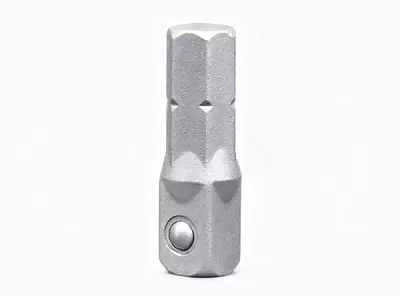
Understanding how adaptor design affects performance can help users make more informed purchasing decisions and achieve better results across a variety of applications.
Compatibility Is More Important Than Ever
Today's fastening environments involve a wide range of equipment, including hand tools, cordless drivers, pneumatic tools, and automated assembly systems.
Without a reliable connection interface, integrating these tools becomes difficult. The 1/4 inch socket adaptor provides a practical solution by enabling sockets and drive tools with different interfaces to function together efficiently.
This compatibility reduces the need for multiple dedicated tool systems and simplifies inventory management. It also allows users to adapt quickly to changing fastening requirements without investing in additional equipment.
In large-scale maintenance and assembly operations, this flexibility contributes directly to workflow efficiency and equipment utilization.
Torque Accuracy Depends on Connection Stability
Many fastening problems originate not from the tool itself but from instability within the connection system.
When an adaptor has excessive clearance or poor dimensional accuracy, torque transmission becomes inconsistent. Some of the applied force is lost through movement between mating components, reducing fastening accuracy and increasing wear.
A precision-manufactured 1/4 inch socket adaptor minimizes these issues by maintaining secure engagement between the drive tool and socket. This improves torque consistency and helps ensure that fasteners receive the intended load.
For applications involving sensitive equipment or precise assembly specifications, even small improvements in torque control can significantly enhance overall product quality.
Why Cold Forging Creates Stronger Adaptors
Manufacturing technology plays a major role in adaptor durability.
High-quality manufacturers such as Shangfeng Machinery utilize advanced cold-forging processes rather than relying solely on conventional machining. During cold forging, metal grain flow follows the shape of the component, creating a denser internal structure with improved strength characteristics.
This process offers several advantages. Mechanical strength increases without requiring additional material. Dimensional consistency improves, and the finished component exhibits better resistance to fatigue and deformation.
For users operating tools daily under demanding conditions, these manufacturing advantages translate into longer service life and more reliable performance.
Surface Treatment and Corrosion Resistance
Fastening tools are frequently exposed to challenging environments, including humidity, dust, lubricants, and chemicals.
To improve durability, professional-grade adaptors often receive specialized surface treatments such as black phosphate coatings, nickel plating, or other corrosion-resistant finishes. These treatments help protect the steel substrate while maintaining dimensional stability.
Corrosion may appear to be a cosmetic issue initially, but over time it can affect fitment accuracy and increase friction during tool engagement. Selecting an adaptor with an appropriate protective finish helps preserve performance throughout its service life.
This becomes particularly important for maintenance teams operating in outdoor environments, industrial facilities, or marine applications.
Long-Term Cost Efficiency Through Better Design
Purchasing decisions are often influenced by unit price, but long-term value depends on total operating cost.
A low-cost adaptor that requires frequent replacement can ultimately cost more than a premium product with a significantly longer lifespan. Additional expenses may include production interruptions, replacement labor, and damage to associated tooling.
High-quality adaptors reduce these hidden costs through improved durability and reliability. Because they maintain dimensional accuracy over a longer period, connected sockets and drive tools also experience less wear.
Over thousands of fastening cycles, the economic advantages become increasingly apparent.
Meeting Global Quality Expectations
As global supply chains become more interconnected, users increasingly expect tooling components to comply with recognized international standards.
Adaptors manufactured according to DIN and ANSI requirements provide greater compatibility across tool brands and geographic markets. Consistent specifications simplify sourcing decisions and reduce the risk of compatibility issues during deployment.
Manufacturers equipped with advanced inspection systems and automated production technologies can maintain these standards more effectively, ensuring consistent quality across large production volumes.
This consistency is particularly valuable for distributors, industrial users, and OEM customers seeking reliable long-term supply partners.
Conclusion
The 1/4 inch socket adaptor may be small, but its impact on fastening performance is significant. It influences torque transmission, tool compatibility, assembly efficiency, and overall system reliability.
By focusing on material quality, manufacturing precision, heat treatment, and corrosion resistance, users can select adaptors that deliver superior long-term performance. Products manufactured through advanced cold-forging technology and produced to DIN and ANSI standards offer clear advantages in demanding industrial environments.
As fastening applications become more complex and efficiency requirements continue to increase, choosing the right 1/4 inch socket adaptor becomes an essential part of building a dependable and productive tooling system.