
 EN


A PZ driver bit is designed for Pozidriv screw heads, which are commonly used in furniture assembly, woodworking, construction, and general industrial fastening. Although Pozidriv and Phillips bits may appear similar, their tip geometries are different. Using the wrong bit can cause poor engagement, screw-head damage, inconsistent fastening, and premature tool wear. For applications involving repeated screw installation, selecting the correct PZ driver bit is therefore a practical way to improve fastening consistency and reduce avoidable rework.
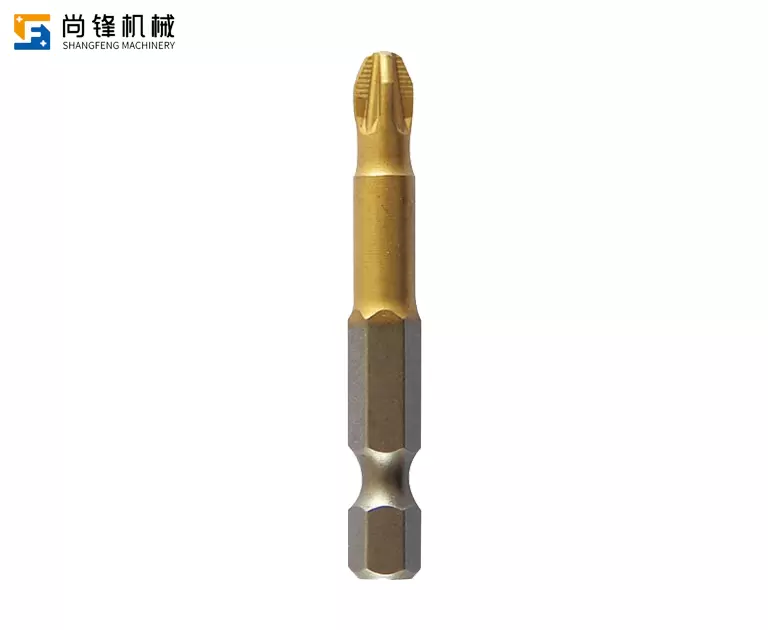
The performance of a PZ driver bit depends on more than its nominal size. Tip geometry, dimensional accuracy, steel properties, heat treatment, surface finish, and compatibility with the drive tool all influence how effectively torque is transferred to the screw. These factors become particularly important in automated assembly, high-volume furniture production, and applications where damaged fasteners can interrupt an otherwise efficient workflow.
Shangfeng Machinery Co., Ltd. manufactures screwdriver bits and related accessories, including ratchet screwdrivers, nut sockets, bit holders, quick-change devices, and screwdriver bit sets. Its manufacturing capabilities include automated tool production equipment, precision inspection equipment, and a Taiwanese cold-forging process. The company produces screwdriver bits according to DIN and ANSI standards, with BSCI certification supporting its broader manufacturing and social-compliance profile. For PZ driver bit applications, the central consideration is how manufacturing precision translates into reliable engagement under actual fastening conditions.
PZ Driver Bit vs. Phillips Bit: Why the Difference Matters
Pozidriv and Phillips are two distinct cross-recess drive systems. Their profiles may look similar at first glance, but the geometry of the recess and the matching driver tip differs. A Pozidriv screw typically has four primary driving wings and four additional smaller ribs between them. A compatible PZ bit is designed to engage this profile, whereas a Phillips bit has a different tip geometry.
Using a Phillips bit in a Pozidriv screw can produce incomplete contact between the driver and the recess. Under load, this mismatch may concentrate force on limited contact areas, increasing the likelihood of slipping or damaging the screw head. The reverse mismatch can also produce poor engagement, even if the bit initially appears to fit.
This distinction is important in production environments where operators may work with several screw types on the same line. Furniture assembly, cabinet manufacturing, electrical enclosure installation, and interior construction can involve different fastener specifications within a single project. Clearly identifying the screw-drive type before choosing the bit helps reduce tool changes caused by incorrect selection and limits damage associated with incompatible profiles.
The correct solution is not simply to choose a bit labeled “cross-head.” The drive standard, screw specification, and required bit size should be verified together. Where multiple fastening systems are used, separate identification and storage can help prevent accidental substitution.
Choosing the Correct PZ Driver Bit Size
Pozidriv bits are commonly designated PZ0, PZ1, PZ2, PZ3, and PZ4, although the appropriate size depends on the screw design and application. PZ2 is widely used in general-purpose woodworking and furniture assembly, while smaller and larger sizes serve other fastener dimensions and load requirements. The designation alone, however, does not guarantee compatibility with every screw in a given size category.
A bit that is too small may have excessive movement inside the recess. This clearance can lead to unstable engagement, uneven loading, and accelerated wear at the tip. An oversized bit may fail to seat fully, contacting only portions of the recess and increasing the risk of damage. In both cases, applying additional torque does not solve the underlying geometric mismatch.
For repeatable assembly, the bit should seat fully in the screw head with minimal unwanted movement. The operator should be able to maintain the driver axis close to perpendicular to the screw surface, especially during initial engagement. If the bit repeatedly slips despite correct alignment, the screw profile, bit size, tip wear, and driver condition should be checked before increasing the applied force.
Bit length is another selection factor. Short bits may offer better rigidity in confined spaces, while longer bits provide access to recessed or obstructed fasteners. However, increasing length can also increase bending leverage under side loads. In applications requiring frequent fastening at high torque, the selected length should balance accessibility with mechanical stability.
Material and Heat Treatment: The Basis of Wear Resistance
A PZ driver bit experiences repeated contact stress at its tip. During fastening, torque is transmitted through relatively small contact areas between the bit and screw recess. If the tip lacks sufficient hardness, the driving edges may deform or wear. If the material and heat-treatment process produce an unsuitable combination of hardness and toughness, the bit may become vulnerable to chipping or fracture under demanding conditions.
Tool steel selection and heat treatment must therefore be considered together. Hardness supports resistance to wear and deformation, while toughness helps the bit withstand impact and sudden changes in load. A higher hardness value does not automatically mean a longer service life, because the result also depends on the steel grade, microstructure, heat-treatment consistency, geometry, and operating conditions.
For impact-driver applications, the distinction between standard screwdriver bits and bits specifically engineered for impact use is particularly important. Impact tools generate repeated torque pulses that can impose more demanding loading conditions than controlled manual driving. A bit intended for impact applications should be selected according to its stated compatibility and testing, rather than assuming that any hardened PZ bit will perform equally well.
Cold forging can help establish consistent geometry by forming the metal under controlled conditions. However, final performance still depends on the complete production process, including subsequent machining where required, heat treatment, finishing, and dimensional inspection. Process control must ensure that the finished tip conforms to the intended profile, not merely that the component has been formed using an appropriate manufacturing method.
How Precision Manufacturing Affects Fastening Performance
Tip geometry determines how force is distributed between the driver and the screw. Small deviations in the driving wings, auxiliary ribs, tip dimensions, or angular relationships can affect seating and contact. These differences may be difficult to notice visually but can become significant when thousands of fastening operations are performed using the same tool specification.
Precision inspection should therefore focus on the functional dimensions of the PZ driver bit. Depending on the product specification, this can include tip profile, overall length, shank dimensions, concentricity, and the fit of the bit in its holder. Inspection equipment should be suitable for the tolerances and geometric features being controlled.
Surface condition also matters. Rough edges, burrs, or inconsistent finishing can interfere with seating and contribute to localized wear. A properly finished tip should maintain the intended geometry without introducing defects that reduce contact quality. If the bit includes a coating or surface treatment, its thickness and consistency should also be considered where they influence fit and wear performance.
For manufacturers supplying large batches, consistent process settings and inspection records help control variation between production lots. A representative sample should be evaluated for dimensional conformity and functional engagement, while application-specific testing can assess wear, torque transmission, or performance under repeated use. The exact acceptance criteria should be defined according to the product specification and the intended fastening environment.
PZ Driver Bits for Furniture, Construction, and Industrial Assembly
The ideal PZ driver bit configuration varies by application. In furniture manufacturing, PZ2 bits are frequently used for common assembly screws. Production lines may prioritize consistent fit, stable operation across repeated cycles, and fast replacement when the tip wears. A standardized bit specification can help reduce variation between workstations and simplify replenishment.
In construction and on-site installation, accessibility and working conditions may be more important. Longer bits can reach recessed screws, while magnetic retention may help keep compatible fasteners in position during installation. Magnetic features are useful in some situations but should not be treated as a substitute for correct bit sizing or secure mechanical engagement.
Industrial assembly may require tighter control of fastening parameters. Where torque-controlled drivers are used, bit wear and screw compatibility can affect the repeatability of the overall fastening process. A worn tip may slip before the target torque is reached or damage the recess, creating additional inspection and replacement work. Establishing a bit replacement interval based on observed wear and application requirements can be more reliable than waiting until a tool visibly fails.
A bit set can simplify deployment when several PZ sizes are used, provided that each bit is clearly marked and stored in a way that prevents mixing. For demanding production environments, the availability of individual replacement bits and consistent specifications across batches may be more important than the number of accessories included in a set.
Evaluating a PZ Driver Bit Supplier
Supplier evaluation should begin with the intended screw specifications and operating conditions. Relevant details include PZ size, required length, shank or holder compatibility, manual or powered operation, expected fastening frequency, and whether impact-driver use is required. These details provide a technical basis for confirming the correct product configuration.
The next step is to verify manufacturing consistency. Ask how the supplier controls tip geometry, material processing, heat treatment, and final inspection. Where standards such as DIN or ANSI are referenced, clarify which specific standard and product requirements apply to the proposed item. A general statement that a product follows industry standards should not replace confirmation of the relevant specification.
Sample testing should use the actual screws and drivers from the intended application whenever possible. Evaluate how securely the bit seats, whether it slips under normal operating conditions, and how its performance changes after repeated use. If the application involves high torque or impact loading, test conditions should reflect those requirements rather than relying exclusively on manual handling.
Total operating cost should also be considered. A lower unit price may be less attractive if inconsistent geometry causes frequent screw damage, higher replacement consumption, or production interruptions. Conversely, a more expensive bit does not necessarily offer better value unless its performance advantage can be demonstrated under relevant conditions.
Conclusion
A reliable PZ driver bit must match the screw profile accurately, maintain its geometry under load, and provide an appropriate balance of wear resistance and toughness. Correct sizing, compatible drive equipment, precision manufacturing, and suitable inspection procedures all contribute to dependable fastening performance.
For applications ranging from furniture assembly to industrial production, the most effective selection process combines specification review with practical testing. Shangfeng Machinery Co., Ltd. offers a range of screwdriver bits and related fastening accessories, supported by automated production equipment, precision inspection capabilities, cold-forging technology, and manufacturing aligned with DIN and ANSI standards. Confirming the exact bit specification and validating it against real application conditions provides a sound basis for achieving consistent engagement, controlling tool consumption, and reducing avoidable fastening defects.