
 EN
EN


The service life of a screwdriver replacement bit directly affects fastening consistency, maintenance cost, and production uptime. In high-volume assembly, a bit that wears out prematurely can cause repeated tool changes, damaged screw heads, rejected components, and interruptions to the production line. In field maintenance, a failed bit may delay equipment repair or make it difficult to remove a fastener without damaging the surrounding parts.
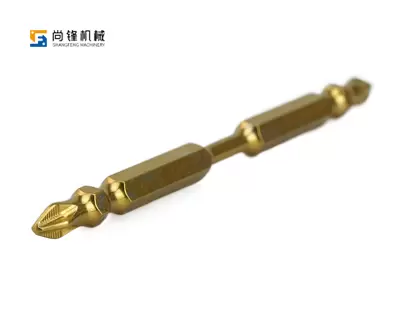
Bit life is not determined by material hardness alone. Tip geometry, heat treatment, torque settings, tool type, fastener material, operator technique, and the quality of the bit holder all influence how quickly a bit degrades. A durable bit must resist wear while retaining sufficient toughness to withstand the loading pattern of its intended application.
For manufacturers sourcing screwdriver replacement bit products, improving service life begins with understanding the actual failure mechanism. Rounded tips, chipped edges, torsional fracture, and screw-head stripping can have different causes and require different corrective actions. Matching the bit to the application and establishing measurable replacement criteria can reduce unnecessary consumption without allowing worn tools to compromise fastening quality.
What Determines Screwdriver Replacement Bit Life?
A screwdriver replacement bit experiences concentrated contact stress where its tip engages the screw recess. During fastening, torque is transmitted through a relatively small contact area, creating local stresses that can gradually wear the profile or cause sudden failure. The exact stress distribution depends on the tip geometry, dimensional fit, screw material, and applied torque.
Material hardness influences resistance to deformation and abrasive wear. However, hardness should be balanced with toughness, particularly when the bit experiences shock loads or repeated torque changes. If the material is too soft for the application, the tip may round off. If the bit lacks adequate toughness, the tip may chip or the shank may fracture under severe loading.
Heat treatment is a major factor in achieving this balance. Controlled hardening and tempering can produce the required mechanical properties, but inconsistent processing may lead to variations between batches. A nominally identical bit may therefore perform differently if material quality or heat treatment is not adequately controlled.
Manufacturing accuracy also affects service life. If the tip profile does not match the screw recess closely, the load may concentrate on a smaller area, accelerating wear and increasing the risk of cam-out. A correctly formed bit distributes contact more effectively when it is properly seated and aligned. This is why precision forming and inspection are as important as material selection.
Why the Correct Tip Profile and Size Matter
One of the most common causes of premature bit wear is using a profile or size that does not match the fastener. A bit that appears to fit may still have poor contact geometry, allowing movement under torque. This movement can round the tip, damage the screw recess, or cause the tool to slip.
Phillips and Pozidriv bits are a common source of selection errors because their cross-shaped profiles look similar. They are designed differently and should not be treated as interchangeable. Using a Phillips bit on a Pozidriv screw, or the reverse, can reduce effective engagement and increase the chance of damage. The correct profile and size should be confirmed from the fastener specification or by a controlled fit check.
Torx bits rely on a six-lobed interface. When the size is correct, the profile can provide effective torque transfer, but an undersized or worn bit can still damage the recess. Hex bits must likewise match the nominal recess size, with enough dimensional accuracy to minimize unwanted movement without preventing proper engagement.
In production environments, bit selection should be standardized wherever possible. Clear storage labels, designated tool locations, and documented setup instructions reduce the chance that an operator will substitute a similar-looking bit. For mixed-product assembly, the profile and size should be included in the work instructions or tool recipe.
If repeated screw damage occurs despite apparently correct selection, inspect the bit and fastener together. The problem may result from an incorrect profile, dimensional variation, worn tooling, or a screw recess that does not meet its own specification.
Torque Settings and Tool Selection
Excessive torque can shorten screwdriver replacement bit life by increasing contact stress and torsional loading. The appropriate torque depends on the fastener size, material, joint design, thread engagement, and required clamping force. Applying more torque than necessary does not automatically create a more reliable joint and may damage the fastener, the bit, or the assembled component.
For manual screwdrivers, the applied torque depends heavily on the operator. For powered tools, adjustable torque settings can improve repeatability when the tool is correctly configured and maintained. In automated fastening, the control strategy should reflect the joint's requirements and account for the behavior of the fastener and assembled materials.
A bit that works well with a low-speed electric screwdriver may not be suitable for an impact driver. Impact tools deliver rapid, repeated torque impulses that can create more severe transient loads than steady manual or conventional powered fastening. Use impact-rated bits only when the manufacturer specifies that they are designed for that service. Fitting a standard bit into an impact driver does not make it suitable for impact use.
Tool alignment is another important factor. When the bit axis is not aligned with the screw axis, side loading can cause uneven contact, tip wear, and screw-head damage. In automated assembly, fixture accuracy and spindle alignment should be checked if bit wear is consistently concentrated on one side. In manual applications, maintaining stable axial pressure helps keep the bit seated during operation.
Where a bit repeatedly fails at the same torque setting, review the full fastening system before simply purchasing a harder bit. Excessive torque, poor alignment, an unsuitable tool mode, or a defective fastener may be the underlying cause.
Manufacturing Quality: Cold Forging, Heat Treatment, and Inspection
The production process determines whether a screwdriver replacement bit can deliver consistent performance across large quantities. Cold forging can efficiently form the metal into the required geometry under controlled conditions, but finished-bit quality also depends on the material, forming accuracy, heat treatment, surface finishing, and inspection procedures.
Tip geometry must remain consistent because small dimensional deviations can affect engagement with the screw recess. Shank dimensions must also match the intended holder interface. A bit that does not seat properly may move under load or create unnecessary wear in the retention mechanism.
Heat treatment should be controlled to achieve the intended balance between hardness and toughness. Excessive variation can result in tips that deform too quickly or bits that fracture under sudden loading. Inspection should therefore be linked to the relevant product specification rather than relying only on visual appearance.
Shangfeng Machinery Co., Ltd. produces screwdriver bits and related accessories using automated manufacturing equipment, precision inspection equipment, and a Taiwan-origin cold-forging process. Its product range includes ratchet screwdrivers, nut sockets, bit holders, quick-change devices, and screwdriver bit sets. The company states that its products are manufactured according to DIN and ANSI standards, providing a basis for specification-driven evaluation.
For demanding applications, buyers should ask which dimensional and performance characteristics are checked, how frequently inspection takes place, and how nonconforming products are handled. Where bit life is a critical cost factor, representative endurance tests can provide more useful information than a general claim of durability.
Identifying Different Bit Failure Modes
Different failure patterns provide clues about the cause of premature replacement. A rounded tip often indicates repeated wear, poor engagement, excessive loading, or use beyond the bit's intended service life. If the bit rounds quickly while the screw recess also becomes damaged, incorrect profile selection or dimensional mismatch should be investigated.
Chipped tips may indicate insufficient toughness, impact loading, misalignment, or a combination of these factors. A fracture through the shank may be associated with excessive torsional stress, a weak cross-section, material defects, or a tool mode for which the bit was not designed. These failures should be reviewed against the operating conditions and product specifications before assigning responsibility to the manufacturing process.
Cam-out is not always evidence of a defective bit. It can occur when the profile is wrong, the bit is worn, axial pressure is inadequate, or the fastening tool is misaligned. In applications with soft materials or delicate finishes, a slipping bit can damage the product even when the bit itself remains usable.
A practical troubleshooting process should record the bit profile and size, fastener type, tool model, torque setting, approximate number of fastening cycles, and observed damage. If failures occur across several production stations, investigate common factors such as fastener supply, tool configuration, and work instructions. If failures are isolated to one batch, compare its dimensions and material-related test results with accepted samples.
Extending Service Life Through Preventive Controls
The most effective way to extend screwdriver replacement bit life is to reduce unnecessary stress and identify degradation before it causes quality problems. Operators should use the correct bit, keep it aligned with the fastener, and avoid forcing a worn or poorly fitting tip into the screw recess.
Tooling inspections can be scheduled according to fastening frequency and application risk. High-volume lines may need checks at defined production intervals, while occasional maintenance work may use visual inspection before each job. The interval should be adjusted according to observed wear rather than applying the same replacement schedule to every application.
A simple service-life record can track how many fastening cycles a bit completes before reaching a defined wear limit. For automated lines, cycle counts may be available from the controller; for manual operations, issue and replacement records can provide an estimate. The data should be interpreted alongside screw damage, joint quality, and tool settings, since a long-lasting bit is not useful if it produces inconsistent fastening results.
Bit holders should also be inspected. Excessive play, poor retention, damaged locking components, or debris in the holder can affect alignment and transfer of torque. Replacing the bit without correcting a defective holder may fail to resolve the problem.
For reusable tool kits, storage and handling matter as well. Keeping bits organized by profile and size reduces selection errors, while protecting the tip from impact during transport helps preserve its geometry. A structured inventory system can also make it easier to identify unusually high consumption rates and prioritize corrective action.
Measuring the Cost of Bit Consumption
Purchase price is only one part of screwdriver replacement bit cost. A more useful comparison includes service life, replacement labor, downtime, damaged fasteners, rejected assemblies, and the risk of product defects. A bit with a higher unit price may provide better overall value if it maintains its profile for more fastening cycles and reduces rework.
For example, consider two bit options used on the same production line. One costs less per unit but must be replaced frequently, while the other has a higher purchase price but lasts longer under the same verified operating conditions. The more economical option depends on the cost per acceptable fastening cycle, not simply the price per bit.
To make a reliable comparison, use the same screw type, tool, torque settings, and operating conditions. Record the number of cycles until the bit reaches a defined wear limit, along with any fastener damage or quality failures. Results from different applications should not be compared directly unless their loading conditions are sufficiently similar.
This approach helps manufacturers identify where premium performance is justified and where a standard bit is adequate. It also provides an objective basis for supplier qualification and future product improvements.
Conclusion
Screwdriver replacement bit life depends on the combined effects of tip geometry, material properties, heat treatment, manufacturing accuracy, torque, tool type, and operating technique. Premature wear should be investigated systematically because replacing the bit alone may not solve problems caused by incorrect fasteners, poor alignment, or excessive torque.
For reliable industrial fastening, specify the correct profile and size, match the bit to the tool's operating mode, and establish inspection and replacement criteria based on actual use. Supplier evaluation should include dimensional consistency, manufacturing controls, and representative performance testing.
Shangfeng Machinery's cold-forging capabilities, automated production equipment, precision inspection processes, and range of screwdriver bits and related accessories provide a starting point for application-specific evaluation. By combining verified product quality with controlled fastening conditions, manufacturers can reduce avoidable bit consumption, protect fasteners, and improve production consistency.