
 EN
EN


In industrial fastening operations, the reliability of torque transfer between driver and fastener is a critical determinant of assembly quality, production efficiency, and tool lifespan. A phillips impact bit is specifically engineered to withstand the intermittent high-torque loads generated by impact drivers, where conventional screwdriver bits frequently fail due to torsional fatigue, cam-out, or tip deformation.
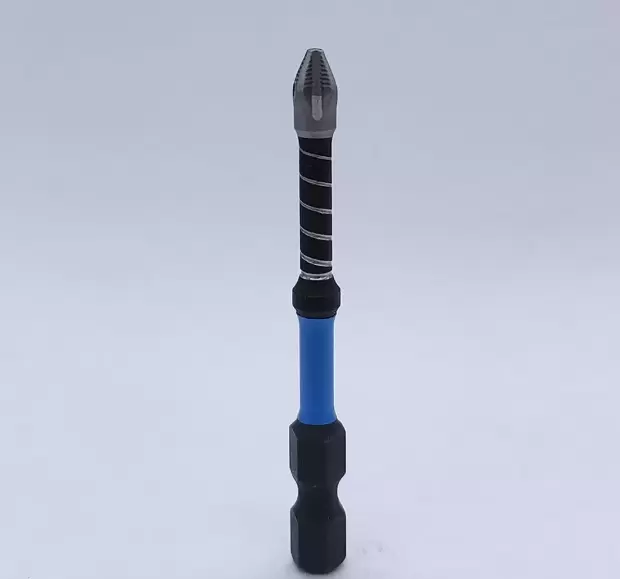
Unlike standard Phillips bits designed for static or low-torque applications, impact-rated bits must absorb repeated удар-like torque pulses ranging from 100 Nm to over 250 Nm depending on driver class. This requires a fundamentally different approach to material selection, geometry optimization, and heat treatment.
Material engineering and cold forging structure
Industrial-grade phillips impact bit products are typically manufactured using S2 alloy steel or equivalent high-impact tool steels. S2 steel provides a balanced combination of hardness (typically 58–62 HRC after heat treatment) and toughness, which is essential for resisting micro-fracture under cyclic loading.
Shangfeng Machinery Co.; Ltd. utilizes Taiwan cold forging technology to enhance grain flow continuity along the bit shaft. Cold forging improves fatigue resistance by aligning the internal grain structure in the direction of torque transmission, reducing stress concentration points that commonly initiate cracking in machined or cast bits.
After forging, controlled heat treatment ensures surface hardness while preserving a tougher core structure. This dual-property design is essential for impact applications where surface wear resistance and core toughness must coexist.
Phillips geometry and cam-out resistance behavior
The Phillips drive system inherently includes a controlled cam-out design, originally intended to prevent over-tightening in manual applications. However, in modern impact driver environments, cam-out becomes a failure mode rather than a safety feature.
To address this, high-performance phillips impact bit designs incorporate optimized flank angles and reinforced tip geometry. The contact interface between bit and screw recess is engineered to distribute axial force more evenly across the drive walls.
Typical industrial improvements include:
Reinforced tip walls with 10–15% increased cross-sectional thickness
Optimized 26°–30° flank engagement angles for improved torque retention
Tighter dimensional tolerances within ±0.02 mm to ensure consistent fit
These refinements significantly reduce cam-out frequency, especially under high-torque bursts where instantaneous load spikes exceed 150 Nm.
Impact driver compatibility and torque dynamics
Impact drivers generate torque through rapid rotational hammering rather than steady rotational force. This introduces high-frequency torsional shock waves into the bit structure, typically ranging from 2,000 to 3,600 impacts per minute (IPM).
A standard bit not designed for impact loading will fail due to stress accumulation at the tip or neck region. A properly engineered phillips impact bit absorbs these shocks through material elasticity and controlled deformation zones.
In controlled testing environments, impact-rated bits demonstrate 2–4 times longer service life compared to standard chrome-vanadium bits under identical load conditions.
For assembly lines involving dense material fastening such as steel framing, automotive interior panels, or industrial machinery housings, this difference translates directly into reduced tool replacement frequency and improved uptime.
Surface treatment and wear resistance optimization
Surface treatment plays a crucial role in extending operational lifespan. Industrial phillips impact bit products often use black oxide, sandblasted finishes, or titanium-based coatings.
Black oxide treatment improves corrosion resistance and reduces friction between bit and screw recess, minimizing wear debris accumulation. Titanium nitride (TiN) coatings further increase surface hardness to approximately 80–85 HRC equivalent surface performance, significantly improving abrasion resistance under repeated high-load cycles.
In high-volume production environments, reduced wear directly correlates with consistent torque transfer accuracy. Worn bits increase slippage risk, leading to stripped screw heads and rework operations.
Dimensional precision and fastening stability
Dimensional consistency is critical for maintaining torque efficiency. Even a deviation of 0.05 mm in tip geometry can significantly affect engagement stability, especially in automated fastening systems.
High-quality phillips impact bit manufacturing follows strict DIN and ANSI dimensional standards, ensuring cross-compatibility across global fastener systems. Shangfeng Machinery’s production line integrates high-precision CNC grinding and automated inspection systems to maintain batch-to-batch consistency.
This level of precision is essential in automated assembly environments where robotic fastening systems rely on repeatable engagement feedback to calibrate torque application.
Application scenarios in industrial fastening systems
Phillips impact bit tools are widely used in industries where high-throughput fastening is required under variable load conditions. Common scenarios include:
Steel framing assembly where fasteners penetrate dense structural materials
Automotive interior assembly involving repetitive screw insertion cycles
Electrical enclosure manufacturing requiring consistent torque control
Wood-based structural assembly with variable density substrates
In these environments, tool reliability directly affects production line stability. A single bit failure can interrupt automated cycles, causing downtime that disproportionately impacts throughput efficiency.
Cost efficiency through lifecycle optimization
While premium phillips impact bit tools may have higher upfront cost, their extended service life significantly reduces total cost of ownership. In high-volume operations, reducing bit replacement frequency by even 30–40% can lead to substantial annual savings in tooling expenditure.
Additionally, improved engagement stability reduces secondary costs associated with stripped fasteners, rework labor, and assembly defects.
Conclusion
The phillips impact bit is not merely a consumable accessory but a precision-engineered torque transmission component designed for high-load, high-frequency fastening systems. Its performance is defined by material science, geometric optimization, and manufacturing precision.
For industrial users operating under demanding fastening conditions, selecting a properly engineered impact-rated bit is essential for maintaining production stability, reducing operational costs, and ensuring consistent assembly quality.