
 EN


In fastening operations, a nut setter is more than a simple screwdriver accessory. Its dimensional accuracy, material strength, magnetic retention, and compatibility with power tools directly influence installation efficiency and fastening consistency. For manufacturers and distributors sourcing from nut setter China suppliers, selecting the right product requires evaluating both manufacturing quality and application-specific performance. Whether used in construction, automotive assembly, metal fabrication, HVAC installation, or general industrial maintenance, a properly engineered nut setter helps reduce fastener damage, improve working efficiency, and maintain reliable torque transmission.
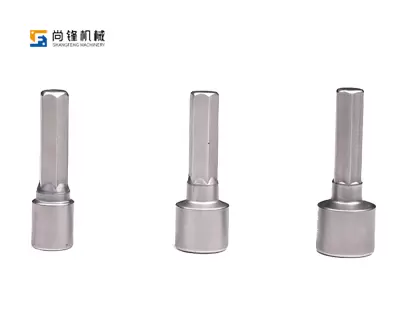
China has become an important manufacturing base for screwdriver bits, nut setters, bit holders, and related fastening accessories. However, differences in raw materials, forming processes, heat treatment, dimensional tolerances, and inspection standards can result in significant variations in product performance. Understanding these technical factors helps identify suppliers capable of delivering consistent quality across different production batches.
What Is a Nut Setter and How Does It Work?
A nut setter is a specialized fastening accessory designed to drive hexagonal nuts, bolts, and hex-head screws using a compatible power screwdriver, drill, or impact driver. Unlike conventional screwdriver bits, which engage with internal screw recesses such as Phillips, Pozidriv, Torx, or slotted profiles, nut setters use a hexagonal socket to engage external hexagonal fastener heads.
The typical nut setter consists of a hexagonal working socket, a connecting shank, and, in some designs, a magnetic retention system. The socket transfers rotational force from the power tool to the fastener, while the shank provides the mechanical connection with the tool holder.
Common configurations include 1/4-inch hex shanks, which are widely compatible with quick-change bit holders and power screwdrivers. Socket sizes are selected according to the fastener dimensions, with metric and imperial specifications serving different application markets.
For example, a 10 mm nut setter is commonly used for compatible metric hex fasteners, while a 3/8-inch nut setter is intended for fasteners specified in imperial dimensions. Correct sizing is essential because excessive clearance can cause slipping, rounding of fastener corners, and uneven load distribution.
How to Select the Right Nut Setter for Different Applications
The first consideration is socket size and dimensional compatibility. The working socket should match the fastener's across-flats dimension. A socket that is too large may concentrate contact near the corners, increasing the risk of deformation under torque. An undersized socket will not engage properly and may damage the fastener or tool.
Working length is another important specification. Standard-length nut setters provide good rigidity and are suitable for general assembly and installation. Extended nut setters are more practical when fasteners are positioned inside deep recesses, narrow channels, or behind structural components. However, increasing tool length also increases bending sensitivity and may affect torque transmission under demanding conditions.
Magnetic retention is particularly useful in overhead installation, repetitive fastening, and applications involving small fasteners. A built-in magnet helps retain the fastener during positioning, reducing the likelihood of dropping nuts or screws. Nevertheless, magnetic strength should be balanced with easy fastener release and compatibility with the intended fastener materials.
Material selection should reflect the expected load and operating environment. Alloy steels such as S2 tool steel are widely used for impact and fastening accessories because of their combination of hardness and toughness. The final performance also depends on heat treatment, microstructure, socket geometry, and manufacturing consistency.
Manufacturing Quality: What Makes a Reliable Nut Setter?
The manufacturing process has a direct influence on the durability and dimensional stability of a nut setter. A reliable product requires controlled material selection, precision forming, heat treatment, machining, and final inspection.
Cold forging is an important manufacturing method for producing screwdriver bits and related fastening accessories. Compared with processes that rely primarily on material removal, cold forging forms the workpiece under controlled pressure, allowing efficient material utilization and consistent production geometry. Properly controlled forming can also help maintain material continuity in the formed component.
Heat treatment determines the final hardness and mechanical characteristics of the product. Excessive hardness may improve surface wear resistance but can increase brittleness, while insufficient hardness may cause premature deformation under repeated torque loads. The appropriate hardness range should therefore be established according to material grade, product geometry, and application requirements.
Dimensional inspection is equally important. Key inspection points include socket across-flats dimensions, socket depth, shank dimensions, concentricity, overall length, and working-end geometry. These parameters affect both fastener engagement and compatibility with power tools.
A professional manufacturer should also evaluate the product under representative fastening conditions rather than relying exclusively on visual inspection and dimensional measurement.
Nut Setter China: Why Manufacturing Capability Matters
Sourcing from a nut setter China manufacturer can provide access to established tool manufacturing capabilities, automated production equipment, and a broad range of fastening accessory configurations. However, supplier selection should focus on actual production capability rather than country of origin alone.
Shangfeng Machinery Co., Ltd. specializes in screwdriver bits, ratchet screwdrivers, nut setters, bit holders, quick-change devices, and screwdriver bit sets. The company has introduced automated tool manufacturing equipment and high-precision inspection equipment to support product consistency.
Its production processes incorporate Taiwan cold forging technology, with screwdriver bits and related accessories manufactured according to DIN and ANSI standards where applicable. The company also holds BSCI certification, supporting its manufacturing and social responsibility credentials.
For customers sourcing nut setters in different specifications, manufacturing flexibility is particularly valuable. Metric and imperial socket sizes, different working lengths, magnetic configurations, shank designs, and customized product combinations may all be required for different markets.
A supplier with integrated production and inspection capabilities can better coordinate these specifications and maintain consistency between samples and mass-production orders.
Common Nut Setter Quality Problems and How to Prevent Them
Several quality issues can affect nut setter performance during actual use. Socket wear is one of the most common problems, particularly when the product is exposed to repeated high-torque fastening. Poor material selection or inappropriate heat treatment may cause the socket to deform or lose its dimensional accuracy.
Another issue is fastener slipping. This can result from incorrect socket dimensions, poor internal geometry, or worn working surfaces. In impact applications, inadequate toughness may also lead to cracking or premature failure.
Shank deformation is another concern when the tool is subjected to excessive torque or lateral loading. Although a nut setter is designed primarily to transmit rotational force, improper alignment during fastening can introduce additional mechanical stress.
To reduce these risks, manufacturers should establish clear material specifications, control heat treatment, inspect critical dimensions, and conduct application-based durability testing. Users should also match the nut setter with the correct fastener size and tool operating conditions.
Conclusion
Choosing the right nut setter requires evaluating socket dimensions, working length, magnetic retention, material properties, heat treatment, and compatibility with power tools. For industrial applications, consistent manufacturing quality is just as important as the nominal product specifications.
When sourcing from nut setter China manufacturers, buyers should examine production technology, dimensional inspection capabilities, applicable standards, and batch consistency. With automated manufacturing equipment, precision inspection systems, Taiwan cold forging technology, and experience in fastening accessories, Shangfeng Machinery Co., Ltd. provides nut setters and related screwdriver products for diverse global applications.