
 EN
EN


In modern industrial assembly environments, fastening accuracy and cycle efficiency directly influence product consistency, structural reliability, and overall production throughput. As assembly systems evolve toward higher automation and tighter tolerances, tooling performance becomes a critical control point. The magnetic nut setter has emerged as a key enabling tool in this transformation, especially in high-precision fastening workflows where repeatability and alignment accuracy are non-negotiable.
Unlike conventional nut drivers that rely purely on mechanical fit, a magnetic nut setter integrates magnetic retention, torque transmission stability, and fast-change interface design, ensuring consistent nut positioning even in high-speed or restricted-access assembly conditions.
This article examines the magnetic nut setter from a production engineering perspective, focusing on fastening efficiency, torque control stability, material engineering, and industrial application scenarios.
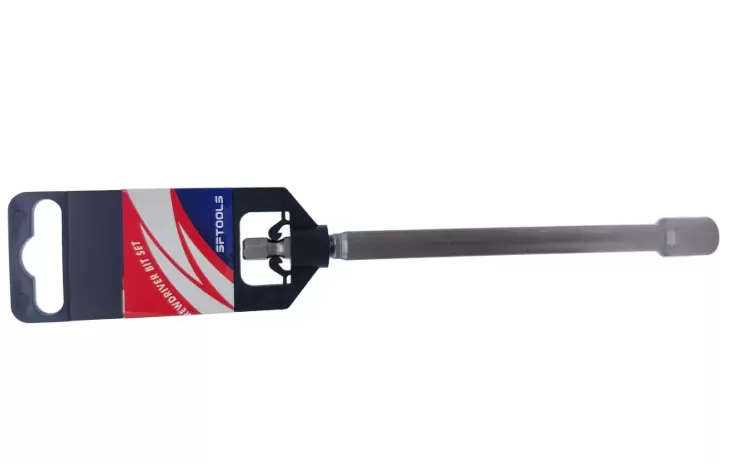
1. Functional Role of a Magnetic Nut Setter in Precision Assembly
A magnetic nut setter is designed to hold fasteners securely during installation while ensuring controlled torque transfer from driver to nut. In high-precision assembly lines, particularly in electronics, automotive sub-assemblies, machinery fabrication, and appliance manufacturing, fastening inconsistencies can lead to:
- Thread misalignment and cross-threading
- Inconsistent torque application
- Fastener drop or misplacement in vertical or overhead operations
- Assembly rework due to incomplete seating
The magnetic nut setter eliminates these risks by maintaining a stable axial alignment between nut and driver bit.
Typical industrial performance parameters include:
- Magnetic holding force: 0.5–3.0 kgf depending on size class
- Torque transmission range: compatible with 5–80 Nm fastening tools
- Radial runout tolerance: ≤0.15 mm for precision-grade models
- Fastener retention probability: ≥99.5% in vertical operation
This makes it particularly effective in automated or semi-automated assembly lines where operator variability must be minimized.
2. Magnetic Retention Engineering: Stability Under Dynamic Load
The core functionality of a magnetic nut setter lies in its magnetic retention system. Unlike simple magnetic tips, industrial-grade nut setters use embedded high-density magnetic rings or axial magnet cores.
Key engineering characteristics:
- Rare-earth magnet materials (typically NdFeB)
- Optimized magnetic field distribution for uniform nut grip
- Heat-resistant magnetic stability up to 80–120°C in continuous operation
In high-speed assembly environments, vibration and rotational inertia can cause fastener disengagement. To counter this, advanced designs implement:
- Dual-pole magnetic stabilization
- Anti-slip internal sleeve geometry
- Friction-assisted retention grooves
This ensures the nut remains securely seated even at rotational speeds exceeding 1,500–2,500 RPM in power tool applications.
3. Torque Transfer Consistency and Fastening Accuracy
One of the most critical performance indicators in fastening systems is torque consistency. Variability in torque transfer can lead to:
- Over-tightening (thread stripping or component deformation)
- Under-tightening (vibration loosening in service conditions)
A high-quality magnetic nut setter ensures that torque is transmitted without energy loss or eccentric deviation.
Key performance benchmarks:
- Torque deviation: ≤±3–5% under standard load conditions
- Axial alignment error: ≤0.1–0.2 mm
- Slip rate under rated torque: <1%
The design geometry plays a critical role:
- Internal hex or square drive interface ensures rigid torque coupling
- Hardened steel body (typically S2 or Cr-V alloy) prevents deformation
- Precision machining ensures consistent engagement depth across batches
In high-volume production environments, this consistency translates directly into reduced rework rates and improved assembly yield.
4. Material Engineering and Manufacturing Precision
Industrial magnetic nut setters are typically manufactured using high-strength alloy steel combined with precision cold-forming or machining processes.
Shangfeng Machinery Co., Ltd. applies Taiwan cold forging technology combined with DIN and ANSI standards, ensuring dimensional accuracy and mechanical durability across global applications.
Key material specifications:
- Hardness: HRC 58–62 for wear resistance
- Tensile strength: ≥1,200 MPa for high-torque applications
- Surface treatment: black phosphate or anti-corrosion coating
- Dimensional tolerance: ±0.02–0.05 mm in critical interfaces
Cold forging provides:
- Grain structure alignment for improved fatigue resistance
- Reduced internal stress compared to traditional machining
- Higher tool life under repetitive torque cycles
This is particularly important in automated assembly systems where tooling is subjected to continuous high-cycle loading.
5. Efficiency Gains in High-Speed Assembly Lines
The introduction of magnetic nut setters significantly improves operational efficiency in assembly environments.
Key efficiency improvements include:
- Fastener pickup time reduction by 40–60% compared to non-magnetic drivers
- Reduced fastener drop incidents by up to 90% in vertical assembly conditions
- Improved one-pass fastening success rate (>98%) in automated workflows
Typical cycle time impact:
- Manual positioning + fastening: 6–10 seconds per fastener
- Magnetic nut setter assisted fastening: 3–6 seconds per fastener
In large-scale production lines, this translates into substantial cumulative time savings, especially in multi-point fastening assemblies such as:
- Automotive chassis sub-frames
- Electrical control cabinets
- Industrial machinery housings
- HVAC and compressor assemblies
6. Compatibility with Power Tools and Quick-Change Systems
Modern magnetic nut setters are designed for integration with:
- Cordless electric screwdrivers
- Pneumatic torque tools
- Automated robotic fastening arms
Shangfeng Machinery Co., Ltd. also produces quick-change adapters and bit holders, enabling rapid tool switching without downtime.
Key interface standards:
- 1/4” hex shank (ISO standard compatibility)
- Magnetic coupling retention optimized for high-speed rotation
- Quick-release locking systems for tool-less changeover
This modular compatibility is essential in flexible manufacturing environments where product variants change frequently.
7. Quality Control and Global Manufacturing Standards
High-performance magnetic nut setters must comply with strict manufacturing and inspection standards to ensure consistency across global markets.
Shangfeng Machinery Co., Ltd. implements:
- DIN and ANSI dimensional compliance
- Automated hardness and torque testing systems
- Batch-level magnetic force verification
- BSCI-certified production management systems
Key quality indicators:
- Bit concentricity: ≤0.1 mm
- Magnetic force deviation: ≤±5% across batch
- Wear cycle durability: >10,000 fastening cycles under rated torque
These controls ensure product reliability in demanding industrial environments where tool failure is not acceptable.
8. Industrial Applications and Use Case Scenarios
Magnetic nut setters are widely used in:
- Automotive component assembly (brackets, sub-frames, interior fixtures)
- Electrical cabinet manufacturing (busbars, grounding systems)
- Appliance production (compressors, structural housings)
- Industrial equipment assembly (gear housings, support frames)
In each case, the primary requirement is consistent fastening under variable conditions, including limited access angles and high-speed assembly constraints.
The magnetic retention system ensures stable operation even in:
- Overhead fastening positions
- Deep cavity assembly zones
- High-vibration environments
Conclusion
The magnetic nut setter is a critical enabling tool in modern high-precision assembly systems, combining magnetic retention stability, torque consistency, and industrial-grade material engineering to deliver reliable fastening performance.
By improving fastener handling efficiency and reducing variability in torque application, it directly enhances production throughput and assembly quality.
With manufacturing expertise from Shangfeng Machinery Co., Ltd.—including cold forging technology, DIN/ANSI compliance, and advanced tooling design—the magnetic nut setter becomes more than a simple accessory. It is a precision-engineered interface between power tools and fastening systems, designed for the demands of modern industrial production.