
 EN
EN


In modern industrial fastening systems, selecting the right tool is no longer a matter of simple compatibility. For high-efficiency assembly lines, electronics production, automotive subassemblies, and mechanical equipment manufacturing, even small variations in fastening tools can lead to measurable differences in torque accuracy, assembly speed, and long-term product reliability.
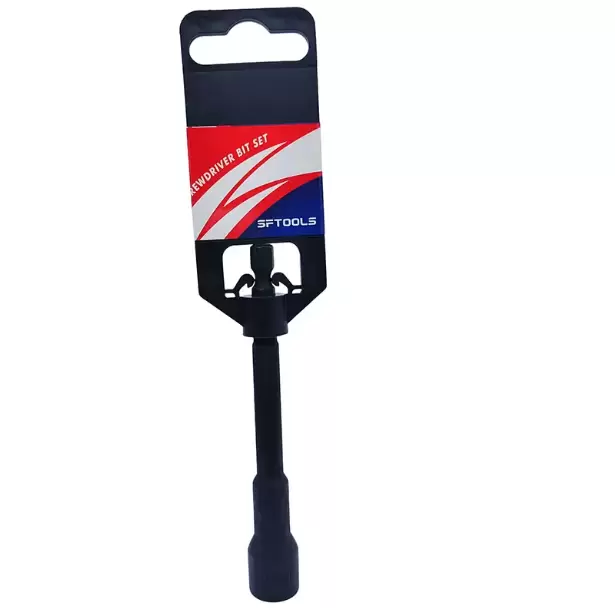
The magnetic nut setter is one such critical tool where specification control directly determines production consistency. However, many users still evaluate it based only on size or magnetic strength, overlooking key engineering parameters that define real-world performance.
This guide breaks down the essential technical specifications that should be evaluated before selecting a magnetic nut setter, based on industrial usage requirements and manufacturing-grade standards.
1. Magnetic Retention Force: Stability Under Dynamic Assembly Conditions
The first and most important specification is magnetic retention force. This determines how securely the nut is held during installation, especially in vertical or overhead operations.
Typical industrial ranges:
- Light-duty applications: 0.5–1.0 kgf
- Standard assembly lines: 1.0–2.0 kgf
- Heavy-duty industrial fastening: 2.0–3.5 kgf
Why it matters:
- Insufficient magnetic force leads to fastener drop and misalignment
- Excessive force can cause delayed nut release after seating
- Inconsistent magnet strength across batches leads to unstable assembly quality
High-quality manufacturers such as Shangfeng Machinery Co., Ltd. use precision-controlled magnetic embedding processes to ensure uniform field distribution across production batches, reducing variation in retention force to within tight industrial tolerances.
2. Torque Transmission Efficiency: Preventing Energy Loss in Fastening
A magnetic nut setter is not only a holding tool—it is a torque transmission interface. Poor design can cause energy loss, resulting in inaccurate tightening.
Key evaluation parameters:
- Torque deviation tolerance: ±3–5% for precision-grade tools
- Slip resistance under peak torque load
- Axial rigidity under rotational stress (≤0.1–0.2 mm deflection recommended)
In industrial applications such as motor housings or structural metal assembly, inconsistent torque leads to:
- Thread fatigue or stripping
- Uneven clamping force distribution
- Long-term loosening under vibration
Shangfeng Machinery Co., Ltd. produces nut setters using DIN and ANSI-compliant geometries, ensuring stable torque transfer across global fastening tool systems.
3. Material Hardness and Heat Treatment Quality
Material engineering determines how long a magnetic nut setter can maintain precision under repeated load cycles.
Key material benchmarks:
- Hardness: HRC 58–62 (industrial-grade standard)
- Core material: S2 alloy steel or Cr-V steel
- Heat treatment consistency: ±2 HRC variation across batch
Cold forming processes, such as the Taiwan cold forging technology used by Shangfeng Machinery, improve grain alignment, resulting in:
- Higher fatigue resistance
- Reduced risk of micro-cracking under torque load
- Improved dimensional stability during long-term use
This is particularly important in high-cycle assembly lines where tools operate continuously for thousands of fastening operations per shift.
4. Dimensional Accuracy and Fit Tolerance
Precision fit between nut setter and fastener is critical for avoiding wobble, stripping, or incomplete engagement.
Key dimensional parameters:
- Inner hex tolerance: ±0.02–0.05 mm
- Concentricity error: ≤0.1 mm
- Wall thickness consistency: ±0.03 mm
Poor dimensional accuracy leads to:
- Eccentric torque application
- Fastener rounding or deformation
- Increased tool wear rate
Industrial-grade manufacturers implement automated CNC machining and high-precision inspection systems to ensure consistent geometry across production batches.
5. Magnetic System Design: Embedded vs Surface Magnetization
Not all magnetic nut setters use the same magnet structure.
Two common designs:
Embedded ring magnet system
- Uniform magnetic field distribution
- Better retention stability under vibration
- Preferred for industrial-grade applications
Surface magnetization system
- Lower production cost
- Higher risk of uneven magnetic pull
- Suitable for light-duty or intermittent use
Shangfeng Machinery Co., Ltd. typically applies embedded magnetic core designs, ensuring stable performance in continuous assembly environments and reducing magnetic degradation over time.
6. Compatibility with Power Tools and Quick-Change Systems
Modern production lines require rapid tool switching without downtime. Therefore, compatibility is a key buying factor.
Standard interfaces include:
- 1/4” hex shank (most common global standard)
- Quick-release locking systems for pneumatic and electric drivers
- Anti-slip drive engagement geometry
Key performance indicators:
- Tool change time: <5 seconds in optimized systems
- Locking stability under high RPM (≥2,000 RPM operation)
- Backlash tolerance: minimal or near-zero movement under load
Shangfeng Machinery also integrates quick-change adapter systems and bit holders, enabling seamless integration with high-speed assembly tools.
7. Durability and Cycle Life Testing
Industrial users should evaluate nut setters based on lifecycle performance, not just initial appearance or magnetic strength.
Key durability benchmarks:
- Operational cycle life: ≥10,000–30,000 fastening cycles
- Wear rate of drive interface: ≤0.1 mm per 10,000 cycles
- Magnetic force degradation: ≤5% after long-term use
Testing methods include:
- Continuous torque cycling tests
- Thermal exposure aging (0–80°C cycling)
- High-vibration simulation testing
Shangfeng Machinery Co., Ltd. uses automated testing equipment to simulate industrial operating conditions, ensuring stable performance before global shipment.
8. Manufacturing Standards and Certification Compliance
Compliance with international standards ensures product interchangeability and reliability.
Important certifications and standards:
- DIN (Deutsches Institut für Normung) compliance
- ANSI (American National Standards Institute) compatibility
- BSCI certification for ethical manufacturing practices
Shangfeng Machinery Co., Ltd. has established a strong global reputation by aligning production with these standards, ensuring that its screwdrivers, nut setters, socket bits, and quick-change accessories are compatible with global industrial systems.
Conclusion
Selecting the right magnetic nut setter requires evaluating far more than just magnetic strength or size. A high-performance tool must balance:
- Stable magnetic retention force
- Accurate torque transmission efficiency
- High material hardness and fatigue resistance
- Precision dimensional control
- Reliable compatibility with power tools and quick-change systems
- Verified cycle life under industrial conditions
Manufacturers like Shangfeng Machinery Co., Ltd. demonstrate how advanced cold forging technology, precision machining, and global standard compliance (DIN/ANSI) combine to produce durable, high-accuracy fastening tools.
In high-volume assembly environments, the difference between a standard tool and an engineered magnetic nut setter is not marginal—it directly affects assembly speed, product quality, and long-term operational stability.