
 EN
EN


Choosing between a universal socket tool set and a traditional socket set is not always straightforward. Both tools are designed for fastening applications, yet they serve different purposes and excel in different working environments.
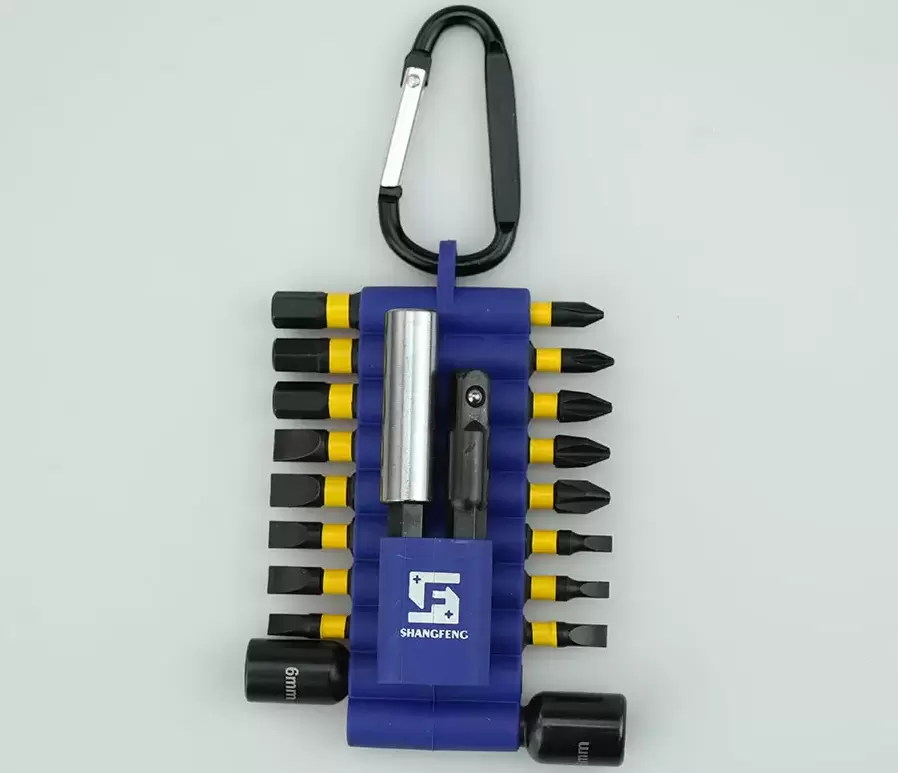
As industrial maintenance, automotive repair, and assembly operations become more diverse, professionals increasingly seek tools that can improve efficiency without sacrificing reliability. Understanding the strengths and limitations of each solution is essential before making a purchasing decision.
Traditional Socket Sets Offer Precision
Traditional socket sets have been the industry standard for decades.
Each socket is manufactured for a specific fastener size, ensuring maximum contact area and efficient torque transfer.
This design provides several advantages.
The fit between the socket and the fastener is extremely precise.
Torque transmission is highly efficient.
The risk of slipping is minimal.
High-torque applications are handled more effectively.
For applications involving repetitive work with known fastener sizes, traditional sockets remain an excellent choice.
However, they also present some challenges.
A complete set may include dozens of sockets.
Carrying and organizing multiple sizes increases complexity.
Changing sockets repeatedly slows down operations.
When working with damaged or irregular fasteners, traditional sockets may fail completely.
These limitations have encouraged the development of more flexible fastening tools.
Universal Socket Tool Sets Prioritize Versatility
The main advantage of a universal socket tool set is adaptability.
Instead of relying on a fixed geometry, the socket adjusts automatically to different fastener shapes and sizes.
This flexibility offers significant benefits.
Users carry fewer tools.
Switching between fasteners is faster.
Irregular or worn bolts can still be gripped.
Storage and transportation become easier.
For field maintenance, emergency repairs, or mixed fastener environments, these advantages can dramatically improve efficiency.
A single universal socket may replace dozens of conventional sockets in certain applications.
This is particularly valuable when technicians must work in confined spaces or move frequently between locations.
Which Tool Performs Better Under Heavy Loads?
Heavy-duty applications require careful consideration.
Traditional sockets generally provide higher torque capacity because their geometry is optimized for a specific fastener size.
Universal sockets, however, have improved significantly in recent years.
High-quality models manufactured from chrome vanadium steel with hardened internal pins are capable of handling many industrial fastening tasks.
The key lies in choosing a product designed for professional use.
Important factors include:
Material hardness.
Pin strength.
Heat treatment quality.
Manufacturing precision.
Surface durability.
Premium universal socket tool sets can deliver excellent performance while maintaining the versatility that traditional sockets lack.
Cost and Efficiency Considerations
Initial purchase price is only one aspect of tool investment.
Traditional socket sets often require purchasing multiple sizes and replacement parts over time.
Universal socket tool sets reduce inventory requirements and simplify storage.
In maintenance environments where time is valuable, the reduction in socket changes can improve overall productivity and lower operational costs.
Therefore, the most economical solution is not necessarily the one with the lowest purchase price.
Instead, buyers should consider:
Application diversity.
Frequency of use.
Maintenance requirements.
Tool lifespan.
Operational efficiency.
When these factors are taken into account, universal socket systems often provide excellent long-term value.
Manufacturing Quality Is the Deciding Factor
Whether choosing a universal socket or a traditional socket, manufacturing quality remains critical.
Precision machining, advanced cold forging technology, and strict quality control determine how long a tool will last and how reliably it will perform.
Shangfeng Machinery Co., Ltd. has accumulated extensive experience in manufacturing fastening tools and accessories.
Its products are manufactured according to DIN and ANSI standards using advanced automated equipment and Taiwan cold forging technology.
This focus on precision ensures:
Stable dimensions.
High torsional strength.
Consistent hardness.
Excellent wear resistance.
Reliable long-term performance.
Such manufacturing capabilities are increasingly important as users demand tools that combine durability with flexibility.
Conclusion
The choice between a universal socket tool set and a traditional socket set depends largely on application requirements.
Traditional sockets provide maximum precision and torque efficiency for fixed fastener sizes. Universal socket tool sets offer unmatched versatility, reduced tool inventory, and greater convenience in mixed or unpredictable working environments.
As fastening technology continues to evolve, many professionals are choosing to use both systems together—traditional sockets for specialized high-torque tasks and universal sockets for everyday versatility.
Ultimately, the best tool is not simply the most powerful or the most flexible. It is the one that delivers reliable performance, improves efficiency, and adapts to the real challenges of modern work environments.