
 EN
EN


Power tool performance has improved dramatically over the past decade. Modern electric screwdrivers, cordless impact drivers, and automated fastening systems now generate significantly higher torque output and faster operating speeds than earlier equipment generations.
While this improves assembly efficiency, it also creates greater stress on fastening accessories—especially the S2 driver bit.
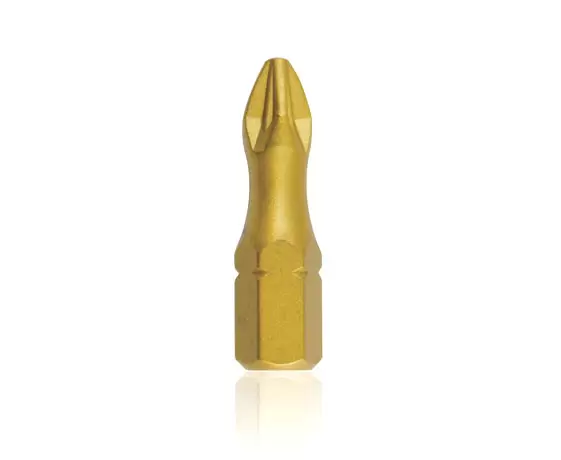
In many industrial applications, bit failure no longer occurs because of simple surface wear. Instead, problems increasingly involve:
- torsional fatigue,
- tip deformation,
- cam-out,
- and microfracture caused by repeated high-torque impact cycles.
As a result, selecting the correct S2 driver bit has become a critical factor in maintaining fastening stability, reducing downtime, and protecting screw integrity during industrial production.
High Torque Changes the Stress Distribution Inside the Bit
Under manual fastening conditions, screwdriver bits mainly experience direct rotational force. In high-torque power tool environments, however, the bit undergoes far more complex stress patterns.
Modern impact drivers generate:
- rapid torsional pulses,
- repeated rotational acceleration,
- and concentrated shock loading
within milliseconds during fastening cycles.
This creates extreme stress concentration at:
- the bit tip,
- torsion zone,
- and shank transition area.
Low-grade bits often fail because their internal material structure cannot absorb repeated torque shock effectively.
S2 alloy steel is widely preferred for industrial driver bits because it offers improved torsional elasticity and fatigue resistance under these dynamic loading conditions.
Tip Geometry Directly Affects Torque Transfer Efficiency
Bit geometry plays a major role in fastening performance.
Poorly machined tips create uneven contact pressure between the bit and screw recess, increasing the likelihood of:
- screw stripping,
- vibration instability,
- torque loss,
- and cam-out.
A high-precision S2 driver bit manufactured according to DIN and ANSI dimensional standards provides:
- tighter recess engagement,
- larger contact surface area,
- and more stable torque transmission.
This improves fastening consistency while reducing screw head damage during high-speed operation.
In automated production environments, even small improvements in bit fit can significantly reduce rejection rates and maintenance interruptions.
Cold Forging Improves Impact Resistance
Manufacturing process quality is often more important than raw material marketing claims.
Shangfeng Machinery uses Taiwan cold forging technology to improve:
- material density,
- grain alignment,
- and structural integrity.
Cold forging compresses the steel structure during forming, reducing internal porosity and improving fatigue resistance under repeated impact loading.
Compared with conventional low-cost machining processes, cold-forged S2 driver bits typically provide:
- better torsional durability,
- improved impact absorption,
- and longer operational lifespan.
This becomes especially valuable in continuous industrial assembly operations where tools may perform thousands of fastening cycles per shift.
Heat Treatment Determines Real Operational Lifespan
Many industrial users compare only advertised hardness values when selecting driver bits. However, hardness alone does not determine durability.
Improper heat treatment can create:
- excessive brittleness,
- uneven hardness zones,
- or premature fracture under shock loading.
A properly engineered S2 driver bit requires balanced heat treatment capable of maintaining:
- sufficient tip hardness for wear resistance,
- combined with enough core toughness for torsional flexibility.
This balance helps the bit absorb impact energy rather than transferring excessive stress directly into the tip structure.
In high-speed impact applications, optimized heat treatment significantly extends service life while maintaining fastening precision.
Surface Wear Resistance Becomes Critical in Continuous Use
High-frequency fastening generates friction between:
- the bit tip,
- screw recess,
- and surrounding fastening surfaces.
Without adequate surface protection, wear gradually reduces dimensional accuracy and increases slippage risk.
Professional S2 driver bits often include surface finishing treatments that improve:
- abrasion resistance,
- corrosion resistance,
- and surface hardness stability.
Stable surface geometry helps maintain reliable screw engagement even after extended industrial usage cycles.
Magnetic Stability and Quick-Change Compatibility Improve Workflow
Modern assembly systems increasingly rely on quick-change fastening configurations.
S2 driver bits used with:
- magnetic holders,
- automatic screw feeders,
- and robotic fastening systems
must maintain highly consistent shank precision to avoid:
- wobbling,
- unstable positioning,
- and insertion misalignment.
Shangfeng Machinery manufactures compatible:
- bit holders,
- quick-change systems,
- ratchet screwdrivers,
- and fastening accessories
designed to improve tool interchangeability and assembly efficiency in industrial workflows.
Quality Consistency Reduces Hidden Production Costs
In industrial environments, inconsistent tool quality often creates larger long-term costs than initial purchasing price.
Batch inconsistency can result in:
- unpredictable tool lifespan,
- fastening instability,
- production downtime,
- and higher inventory management complexity.
Shangfeng Machinery combines:
- automated production equipment,
- precision inspection systems,
- and standardized manufacturing processes
to maintain stable product consistency across global supply chains.
For high-volume assembly operations, predictable bit performance improves overall operational efficiency and maintenance planning.
S2 Driver Bits Are Evolving Alongside Industrial Automation
As manufacturing systems become increasingly automated, fastening tools are evolving from simple accessories into precision-engineered production components.
Today’s industrial S2 driver bit must support:
- high-speed electric tools,
- automated robotic assembly,
- continuous torque cycling,
- and strict dimensional repeatability.
This requires integration of:
- advanced metallurgy,
- precision machining,
- optimized heat treatment,
- and stable production control.
Conclusion
Selecting the correct S2 driver bit for high-torque industrial applications requires evaluating far more than basic hardness specifications.
Long-term fastening reliability depends on the combination of:
- S2 alloy steel quality,
- cold forging density,
- precision geometry,
- balanced heat treatment,
- and dimensional consistency.
As power tools and automated assembly systems continue increasing torque output and operating speed, high-performance driver bits are becoming essential for maintaining:
- fastening accuracy,
- screw protection,
- production efficiency,
- and operational stability.
Through advanced manufacturing capability, DIN/ANSI standard production, and precision inspection systems, Shangfeng Machinery continues providing industrial-grade S2 driver bit solutions designed for demanding global fastening applications.