
 EN
EN


In industrial fastening applications, screwdriver bits are often treated as small consumable accessories. However, in high-frequency assembly environments, the actual performance of an S2 driver bit directly affects fastening precision, production efficiency, screw integrity, and long-term tooling cost.
As automated assembly systems and power tools continue evolving toward higher torque output and faster operating cycles, low-quality driver bits increasingly become a weak point in production systems. Premature wear, tip deformation, screw slipping, and unstable torque transfer can quickly reduce assembly consistency and increase downtime.
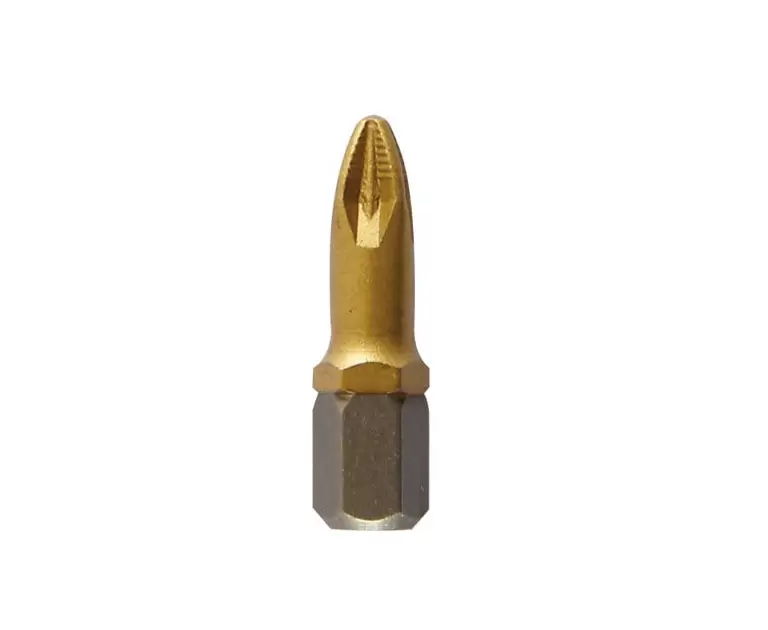
This is why manufacturers across industries such as:
- electronics,
- automotive components,
- furniture production,
- home appliances,
- industrial equipment,
- and construction hardware
are placing greater emphasis on driver bit metallurgy, machining precision, and dimensional stability rather than simply comparing tool pricing.
Why S2 Steel Is Widely Used in Professional Driver Bits
Material selection is one of the most important factors determining driver bit lifespan.
An S2 driver bit is manufactured from S2 alloy steel, a high-performance tool steel commonly used in impact-resistant fastening tools because of its balance between:
- hardness,
- toughness,
- wear resistance,
- and torsional strength.
Compared with standard carbon steel bits, S2 steel offers significantly improved resistance against:
- tip rounding,
- edge cracking,
- torque fatigue,
- and brittle fracture.
This becomes particularly important in power tool applications where repeated high-speed fastening cycles continuously stress the bit tip under concentrated torsional load.
In industrial production lines operating thousands of fastening cycles daily, material fatigue resistance directly affects operational stability and replacement frequency.
Hardness Alone Does Not Guarantee Better Performance
Many buyers focus only on HRC hardness values when evaluating screwdriver bits. In reality, excessive hardness without sufficient toughness often increases fracture risk.
A properly engineered S2 driver bit must maintain a controlled balance between:
- surface hardness,
- core toughness,
- and torsional elasticity.
If the bit is too soft, the tip wears rapidly and loses dimensional accuracy. If it becomes excessively brittle, microcracks form under repeated torque loading, eventually causing sudden fracture.
This is why advanced heat treatment processes are critical.
Shangfeng Machinery combines Taiwan cold forging technology with precision heat treatment control to optimize:
- grain structure consistency,
- impact resistance,
- and torque durability.
The result is improved bit stability during high-frequency fastening operations.
Precision Tolerance Directly Affects Screw Engagement
One overlooked factor in screwdriver bit performance is dimensional accuracy.
Even small machining deviations can create:
- poor screw engagement,
- cam-out,
- unstable torque transfer,
- and accelerated screw head wear.
In automated production environments, inaccurate bit geometry can also reduce assembly consistency and increase rework rates.
High-quality S2 driver bits manufactured according to DIN and ANSI standards maintain strict tolerance control for:
- tip dimensions,
- concentricity,
- hex shank precision,
- and profile symmetry.
This improves contact surface matching between the bit and screw recess, reducing localized stress concentration during fastening.
Better fit directly translates into:
- smoother torque transmission,
- lower screw damage rates,
- and more stable assembly quality.
Cold Forging Improves Structural Density
Manufacturing technology significantly affects the long-term durability of driver bits.
Shangfeng Machinery utilizes Taiwan cold forging forming technology to improve material density and structural consistency during production.
Compared with low-cost machining-only manufacturing methods, cold forging offers several advantages:
- denser grain structure,
- improved torsional strength,
- reduced internal voids,
- and better fatigue resistance.
For industrial users, this means the bit can withstand:
- repeated impact loading,
- high-speed electric screwdriver operation,
- and continuous industrial fastening cycles
with reduced deformation risk.
Torque Stability Matters More in Automated Assembly
Modern industrial assembly systems increasingly rely on:
- electric screwdrivers,
- robotic fastening units,
- and automated torque control systems.
In these environments, torque stability becomes more important than basic manual usability.
An unstable driver bit can create:
- inconsistent tightening force,
- fastening deviation,
- thread damage,
- and assembly rejection.
S2 driver bits with optimized geometry and balanced hardness improve torque transmission efficiency while reducing energy loss caused by slippage or deformation.
This becomes especially important in industries requiring precise fastening repeatability such as:
- electronics manufacturing,
- automotive assembly,
- and appliance production.
Surface Treatment Influences Corrosion Resistance and Wear
Industrial driver bits are frequently exposed to:
- oil,
- humidity,
- dust,
- and chemical residues.
Without proper surface treatment, oxidation and surface wear can gradually reduce fastening precision.
Many professional S2 driver bits use specialized coatings or finishing treatments to improve:
- corrosion resistance,
- surface hardness,
- and friction stability.
This extends operational lifespan while maintaining dimensional accuracy during long-term industrial use.
Quick-Change Compatibility Improves Workflow Efficiency
High-frequency assembly environments increasingly prioritize tool interchangeability.
Modern S2 driver bits are commonly integrated with:
- quick-change holders,
- magnetic bit adapters,
- ratchet systems,
- and automated fastening equipment.
Stable shank precision ensures:
- smoother insertion,
- reduced wobbling,
- and faster tool replacement during continuous production cycles.
Shangfeng Machinery also manufactures:
- bit holders,
- ratchet screwdrivers,
- socket systems,
- and quick-change devices,
allowing broader compatibility across industrial fastening applications.
Quality Consistency Is Critical for Global Supply Chains
Industrial buyers increasingly prioritize supplier consistency rather than isolated sample quality.
In global assembly operations, inconsistent bit quality can create:
- unpredictable tool life,
- assembly instability,
- and inventory management difficulties.
Shangfeng Machinery combines:
- automated production equipment,
- precision inspection systems,
- and standardized DIN/ANSI manufacturing
to maintain stable batch consistency across large-scale production.
Its BSCI-certified manufacturing capability also supports global sourcing requirements for industrial and professional tool markets.
Conclusion
An industrial-grade S2 driver bit is far more than a basic fastening accessory. Its actual performance depends on the integration of:
- alloy steel quality,
- heat treatment balance,
- cold forging density,
- precision machining,
- and torque stability engineering.
As assembly systems become faster and more automated, driver bit performance increasingly affects:
- fastening consistency,
- production efficiency,
- screw protection,
- and long-term tooling cost.
By combining advanced manufacturing technology, precision inspection capability, and standardized production processes, Shangfeng Machinery continues delivering S2 driver bit solutions designed for demanding industrial fastening environments.