
 EN
EN


In industrial assembly environments, fastening efficiency directly affects production consistency, equipment reliability, and long-term maintenance costs. While bolts, screws, and fastening systems often receive most of the engineering attention, the performance of supporting fastening tools is equally critical.
Among these tools, nut setters play a central role in high-frequency fastening operations across industries such as automotive manufacturing, construction, appliance production, metal fabrication, renewable energy equipment, and industrial assembly.
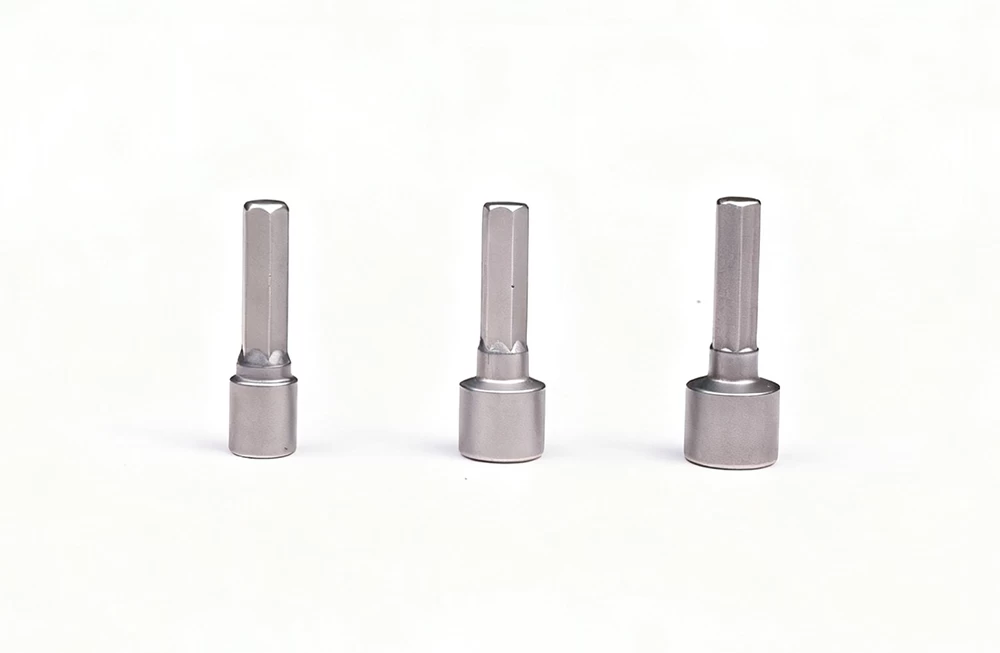
As production automation continues advancing globally, demand for precision-engineered fastening accessories has increased significantly. This is why choosing a reliable DIN standard nut setter supplier has become increasingly important for manufacturers seeking stable fastening performance and long-term tooling durability.
What Is a DIN Standard Nut Setter?
A DIN standard nut setter is a fastening tool accessory manufactured according to German DIN dimensional and performance standards.
Nut setters are commonly used with:
- Power drills
- Impact drivers
- Automated screwdriving systems
- Pneumatic fastening equipment
- Robotic assembly systems
Their primary function is to securely drive hex nuts and hex-head fasteners while maintaining torque transmission stability.
Compared with non-standard tools, DIN-compliant nut setters offer more precise dimensional consistency, better compatibility, and improved operational reliability.
This becomes particularly important in automated or high-cycle fastening environments.
Why DIN Standards Matter in Fastening Applications
In industrial manufacturing, dimensional tolerance directly affects fastening precision.
Poorly manufactured nut setters may lead to:
- Fastener slipping
- Torque loss
- Premature wear
- Socket deformation
- Assembly inconsistency
DIN standards help standardize:
- Hex dimensions
- Hardness requirements
- Material specifications
- Torque compatibility
- Fitment tolerances
This ensures that nut setters maintain reliable engagement with fasteners across different assembly conditions.
For automated production systems, even minor dimensional variation can negatively affect tool positioning accuracy and cycle stability.
Precision Fit Reduces Fastener Damage
One of the most common problems in fastening operations is fastener rounding or edge damage.
Low-precision nut setters often create uneven contact stress on hex fasteners, especially under high torque conditions.
This can result in:
- Rounded fastener corners
- Reduced torque transmission
- Increased maintenance time
- Assembly rejection
DIN standard nut setters are engineered to maintain tighter engagement tolerances between the socket and fastener.
Improved surface contact helps distribute torque more evenly during fastening.
This becomes especially important in applications involving:
- Stainless steel fasteners
- High-torque assembly
- Repetitive production cycles
- Automated assembly equipment
Material Selection Directly Affects Tool Lifespan
The durability of a nut setter depends heavily on material composition and heat treatment processes.
Industrial fastening environments expose tools to:
- Repeated impact loads
- High rotational stress
- Surface friction
- Continuous thermal cycling
Low-quality materials may develop:
- Surface cracking
- Premature wear
- Bit deformation
- Internal fatigue failure
Professional DIN standard nut setter suppliers typically use high-strength alloy steel combined with optimized heat treatment processes.
This improves:
- Hardness stability
- Wear resistance
- Impact durability
- Torque retention capability
For high-volume production environments, longer tool lifespan directly reduces operational downtime and tooling replacement cost.
Cold Forging Technology Improves Structural Strength
Manufacturing technology significantly affects fastening tool performance.
Shangfeng Machinery adopts Taiwan cold forging technology for screwdriver bits, nut setters, and fastening accessories.
Compared with conventional machining methods, cold forging offers several advantages:
- Higher material density
- Improved grain structure continuity
- Better impact resistance
- Enhanced dimensional consistency
Cold-forged tools typically demonstrate stronger structural integrity under high-load applications.
This is particularly important for impact-driven fastening systems operating at high rotational speed and torque.
Compatibility Is Critical in Automated Assembly
Modern industrial assembly lines increasingly rely on automation.
Automated fastening systems require tooling components capable of maintaining:
- Stable dimensional accuracy
- Repeatable engagement precision
- Consistent torque transfer
- High-speed operational stability
DIN standard nut setters provide standardized compatibility across global fastening systems.
This simplifies integration with:
- Robotic fastening cells
- Automatic screw feeders
- Pneumatic tools
- Electric torque systems
For multinational manufacturing operations, standardized tooling reduces compatibility risk between production facilities.
Magnetic Nut Setters Improve Operational Efficiency
Many industrial fastening applications benefit from magnetic nut setter configurations.
Integrated magnetic retention helps:
- Improve fastener positioning
- Reduce dropped fasteners
- Increase assembly speed
- Improve operator efficiency
In vertical or confined assembly environments, magnetic retention significantly improves fastening stability.
High-strength magnetic systems are particularly valuable in:
- Steel structure assembly
- Electrical cabinet installation
- Appliance manufacturing
- Automotive component assembly
Surface Treatment Improves Corrosion Resistance
Industrial tools often operate in challenging environments including:
- High humidity
- Chemical exposure
- Outdoor construction sites
- Coastal regions
Surface treatment quality directly affects long-term corrosion resistance.
Professional DIN standard nut setter suppliers typically provide surface finishing options such as:
- Black phosphate coating
- Sandblasting
- Nickel plating
- Chrome coating
These treatments help improve corrosion protection while reducing surface wear during repeated use.
Quality Inspection Determines Product Consistency
Fastening tools require stable manufacturing consistency across production batches.
Professional suppliers invest heavily in high-precision inspection systems to verify:
- Dimensional tolerance
- Hardness consistency
- Torque resistance
- Surface quality
- Concentricity accuracy
Shangfeng Machinery has introduced advanced automated production equipment and high-precision inspection systems to ensure stable product quality.
This level of manufacturing control is increasingly important for industrial customers requiring long-term tooling consistency.
BSCI Certification Supports Global Supply Chain Requirements
Global buyers increasingly evaluate suppliers based not only on product quality but also manufacturing compliance standards.
BSCI certification demonstrates commitment to:
- Responsible manufacturing
- Supply chain transparency
- International production standards
For international procurement projects, certified suppliers often provide greater long-term cooperation reliability.
Why Reliable Suppliers Matter More Than Low Pricing
In industrial fastening systems, tool failure creates costs far beyond the price of the tool itself.
Low-quality nut setters may cause:
- Production interruption
- Equipment downtime
- Fastener damage
- Rework costs
- Assembly inconsistency
Reliable DIN standard nut setter suppliers focus on long-term operational performance rather than low-cost short-term production.
This becomes especially important in high-cycle manufacturing environments where tooling reliability directly affects production efficiency.
Conclusion
As industrial assembly systems continue evolving toward higher automation and precision, fastening accessories must deliver greater dimensional consistency, durability, and compatibility.
A professional DIN standard nut setter supplier provides not only compliant tooling products but also manufacturing reliability, quality stability, and long-term operational value.
With advanced automated production equipment, Taiwan cold forging technology, high-precision inspection capability, and DIN-compliant manufacturing processes, Shangfeng Machinery continues delivering high-quality fastening solutions for global industrial markets.