
 EN
EN


A power tool adaptor is a relatively small component, but its dimensional accuracy, material strength, heat treatment, and connection geometry directly influence the performance of the complete power tool system. For distributors and tool manufacturers, choosing a reliable power tool adaptor supplier therefore requires more than comparing unit prices and catalog sizes.
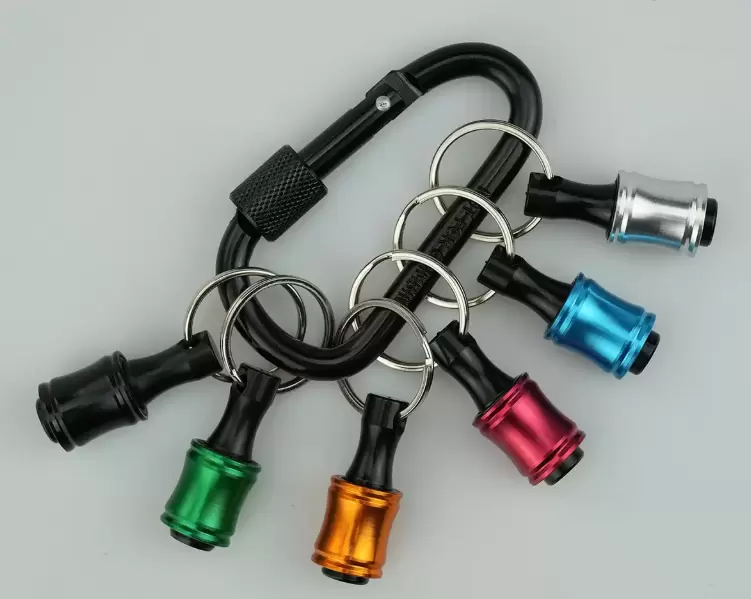
The adaptor must transfer torque efficiently between the driving tool and the working accessory while maintaining secure engagement under repeated loading. Poor dimensional control can lead to excessive clearance, wobble, premature wear, or difficulty during accessory changes. In high-volume applications, these issues can quickly become production and quality-control problems.
A technically capable supplier should be able to demonstrate consistent manufacturing, accurate dimensions, appropriate material selection, standardized interfaces, and reliable inspection processes.
Material and Manufacturing Process Determine Adaptor Performance
Power tool adaptors are exposed to repeated torque, impact, vibration, and mechanical stress. The material and forming process therefore have a direct influence on service life.
Cold forging is particularly valuable for producing high-strength tool accessories because the process can improve dimensional consistency and produce a dense material structure without relying entirely on machining from bar stock.
Shangfeng Machinery uses Taiwan cold forging technology for screwdriver bits and related tool accessories. Cold forming can support efficient mass production while maintaining the geometric accuracy required for standardized interfaces.
Material selection should still be matched to the application. Common alloy steels used for tool accessories need an appropriate balance of hardness, toughness, wear resistance, and fatigue performance. Excessive hardness without sufficient toughness can increase the risk of cracking under impact conditions, while insufficient hardness can accelerate wear.
Interface Accuracy Is Critical
The most important dimensions of a power tool adaptor are not necessarily its overall length or appearance. Interface geometry determines whether the adaptor fits correctly and transfers torque without excessive movement.
Depending on the product design, critical features may include hex dimensions, drive size, socket interface, retaining mechanism, groove geometry, concentricity, and overall dimensional tolerance.
For example, an adaptor intended for a 1/4-inch hex interface must maintain the required geometry so that the driving tool and accessory engage correctly. Excessive dimensional clearance can create radial movement and increase wear during high-speed rotation.
For professional applications, suppliers should provide dimensional inspection records and clearly define the applicable standards. Shangfeng Machinery manufactures relevant tool accessories according to DIN and ANSI standards, providing a standardized basis for international product requirements.
Torque Capacity Should Match the Application
Not every power tool adaptor is designed for the same torque conditions.
A lightweight adaptor used with a compact cordless screwdriver may experience substantially different loads from one installed on an impact driver or used with a high-torque fastening application.
When evaluating an adaptor, the required torque range, impact frequency, operating speed, accessory type, and expected service life should be considered together.
Repeated impact loading is particularly demanding because the component experiences rapid torque fluctuations rather than a single static load. In these conditions, toughness and fatigue resistance can be just as important as nominal hardness.
A supplier should therefore be able to explain how material selection, heat treatment, and manufacturing processes support the intended operating conditions.
Precision Inspection Supports Batch Consistency
For distributors purchasing thousands or tens of thousands of adaptors, one good sample is not enough. Batch-to-batch consistency is critical.
High-precision inspection equipment can verify critical dimensions such as diameter, length, interface size, concentricity, and feature position. Inspection should be integrated into production quality control rather than performed only before shipment.
This is especially important when adaptors are installed in automated or semi-automated tool assembly. Small dimensional variations that may be acceptable in manual use can become problematic when components must repeatedly fit a fixed interface.
Shangfeng Machinery has introduced automated tool-production equipment and high-precision inspection equipment to support large-scale manufacturing of screwdriver bits and related accessories.
Surface Finish and Heat Treatment Affect Service Life
Surface condition influences friction, wear, corrosion resistance, and visual quality.
Depending on the application, an adaptor may require surface treatments such as black oxide or other protective finishes. The appropriate treatment depends on the material, operating environment, and required corrosion resistance.
Heat treatment must also be controlled carefully. The objective is not simply to maximize hardness but to establish the required combination of hardness and toughness throughout the working area.
For impact applications, uncontrolled or excessive hardness can be counterproductive because the adaptor must withstand repeated shock loads without brittle failure.
Compatibility with Different Accessories Adds Commercial Value
A power tool adaptor supplier serving international markets may need to support multiple drive sizes and accessory standards.
Products may include adaptors for sockets, screwdriver bits, quick-change systems, ratchet applications, and other fastening accessories. Compatibility should be clearly defined rather than described simply as "universal."
For example, a quick-change adaptor may need to support rapid accessory replacement while maintaining sufficient retention under rotation. A socket adaptor may prioritize secure drive engagement and torque transfer.
A supplier with a broader product portfolio can simplify sourcing when multiple fastening accessories are required for the same project.
Shangfeng Machinery manufactures screwdriver bits, ratchet screwdrivers, nut sockets, bit holders, quick-change devices, screwdriver bit sets, and related accessories, allowing customers to source multiple components from one manufacturing system.
Certification and Production Management Matter for Global Supply
For international buyers, manufacturing capability must be supported by appropriate quality and social-compliance systems.
BSCI certification can provide evidence that the supplier operates within recognized social-compliance requirements. However, certification should be considered alongside actual production capability, quality controls, inspection procedures, packaging standards, and delivery consistency.
A reliable power tool adaptor supplier should also be able to provide clear technical drawings, specifications, samples, packaging requirements, and production lead-time information.
These factors reduce communication errors when products are manufactured for different markets.
Evaluate the Supplier Through Samples and Production Trials
Before approving a supplier, sample evaluation should cover more than visual inspection.
The adaptor should be checked for interface fit, dimensional accuracy, concentricity, surface quality, locking performance, and compatibility with the intended power tool and accessory.
Where torque or impact loading is significant, functional testing should simulate the intended operating environment. A sample that fits correctly but fails under repeated impact is not an acceptable production solution.
For long-term supply, initial samples should also be compared with subsequent production batches to verify consistency.
Conclusion
Choosing the right power tool adaptor supplier requires a technical assessment of the entire manufacturing process. Material grade, cold forging, heat treatment, dimensional accuracy, interface geometry, torque capacity, surface treatment, and inspection capability all contribute to final adaptor performance.
Shangfeng Machinery combines automated production equipment, high-precision inspection, Taiwan cold forging technology, and manufacturing according to DIN and ANSI standards. Its product range extends from screwdriver bits and bit holders to socket accessories, quick-change devices, ratchet screwdrivers, and complete bit sets.
For international tool and accessory programs, this integrated manufacturing capability can provide a more reliable foundation for consistent quality, standardized interfaces, and long-term supply.