
 EN
EN


When fastening torque increases, the interface between a screwdriver bit and screw recess becomes a critical mechanical connection. A conventional bit may perform adequately under moderate torque, but higher loads can increase the risk of cam-out, tip deformation, screw-head damage, and premature tool failure.
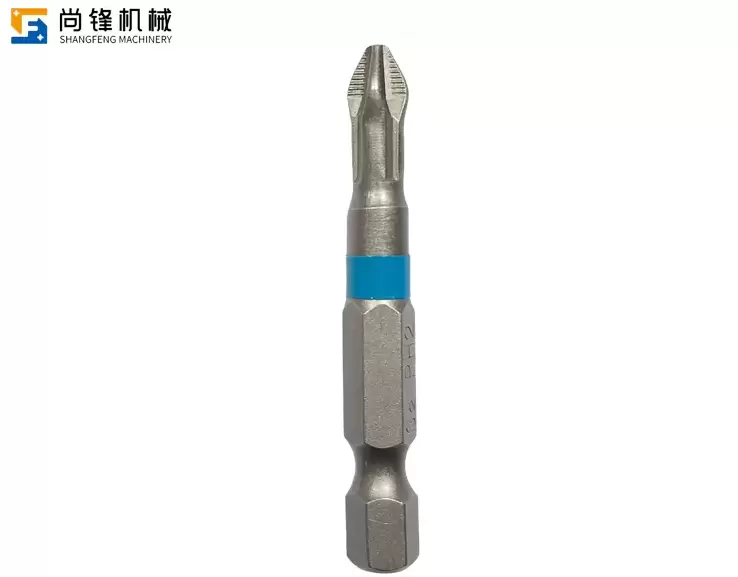
ACR bits with anti-slip design address this problem by improving engagement between the driver and screw. Their performance is determined by the interaction of tip geometry, material strength, hardness, manufacturing tolerance, surface condition, and actual fastening parameters.
For professional fastening tools and industrial assembly, the correct ACR bit should therefore be selected according to the complete fastening process rather than the bit specification alone.
Torque Transfer Is the Core Performance Requirement
When a screwdriver applies torque, the force must be transferred through the contact surfaces of the bit and screw recess.
The higher the applied torque, the greater the mechanical stress at these contact points.
If the bit does not remain properly seated, part of the rotational force is converted into lateral movement. The bit can then climb out of the recess.
This reduces fastening efficiency and may damage both the bit and screw.
An anti-slip design aims to maintain more stable engagement during torque application.
High-Torque Applications Increase Failure Risk
Cordless impact drivers and industrial fastening systems can generate substantially higher torque than manual screwdrivers.
The rapid torque pulses produced by impact tools can create particularly demanding conditions.
The bit must resist torsional stress while maintaining the correct tip geometry after repeated cycles.
If the tip becomes rounded or deformed, engagement decreases further, potentially creating a progressive failure pattern in which each fastening cycle accelerates additional wear.
This is why impact applications often require a carefully balanced combination of hardness and toughness.
Hardness and Toughness Must Be Balanced
The hardest screwdriver bit is not automatically the best screwdriver bit.
Hardness improves resistance to surface deformation and wear. Toughness helps the bit withstand impact and torsional shock without fracturing.
A bit with excessive hardness may resist wear effectively but fail under severe impact loading. A bit with insufficient hardness may survive impact but deform quickly.
The appropriate heat-treatment process must therefore create a controlled mechanical-property balance.
For industrial applications, batch-to-batch hardness consistency is equally important because inconsistent mechanical properties lead to unpredictable tool life.
Dimensional Accuracy Affects Anti-Slip Performance
Anti-slip geometry only works when the actual tip dimensions remain within the intended tolerance.
A small deviation in critical contact surfaces can change how the bit sits inside the screw recess.
If contact becomes concentrated in a small area, local stress increases.
If the fit becomes too loose, movement inside the recess increases.
This is why precision inspection is essential for screwdriver-bit manufacturing.
Shangfeng Machinery uses high-precision inspection equipment alongside automated production equipment to control product consistency.
Cold Forging for High-Volume Production
Cold forging provides an efficient method for forming precision metal components in large quantities.
The process can create the basic bit geometry with high repeatability while supporting efficient material utilization.
Shangfeng Machinery uses Taiwan cold-forging technology for screwdriver bit production.
For ACR bits, the forming process must be followed by appropriate heat treatment and finishing operations to achieve the required combination of dimensional accuracy and mechanical performance.
Production tooling also requires regular control because gradual die wear can influence the final dimensions of high-volume batches.
The Screw Is Part of the System
An ACR bit cannot be evaluated independently from the screw.
Screw head geometry, recess depth, material hardness, coating, and manufacturing tolerance all affect engagement.
For example, a high-quality bit may still cam out when used with a damaged recess or a screw with poor dimensional accuracy.
Therefore, fastening trials should use representative screws and actual operating conditions.
The most meaningful test is not whether the bit works with one ideal screw, but whether the complete bit-and-screw combination maintains reliable engagement throughout the intended torque range.
Bit Size Must Match the Fastener
Using the correct bit size is fundamental.
An undersized bit may contact only a limited portion of the screw recess, increasing localized stress.
An oversized bit may not fully enter the recess or may interfere with the screw head.
In production environments, automatic bit selection and tool-change systems should also ensure that the correct bit specification is consistently used.
A technically excellent ACR bit cannot compensate for incorrect tool selection.
Surface Treatment Can Support Service Life
Depending on the application, surface treatment can contribute to corrosion resistance, wear resistance, or friction control.
However, any coating or surface treatment must preserve the functional dimensions of the tip.
This is especially important for small precision bits because a relatively thin coating can affect the effective geometry of the contact surfaces.
The finished product should therefore be inspected after surface treatment rather than relying solely on pre-treatment measurements.
Bit Life Should Be Evaluated by Fastening Cycles
Tool life is more meaningful when measured against actual fastening cycles.
For example, a bit that completes 1,000 fastening cycles before noticeable wear may be more economical than a lower-cost bit that requires replacement after 400 cycles.
In automated assembly, the difference becomes more significant because tool replacement also creates downtime.
A complete cost evaluation should consider bit price, fastening cycles, replacement frequency, screw damage, labor, and machine downtime.
Where Anti-Slip ACR Bits Can Add Value
High-volume furniture production is one application where repeated fastening can rapidly accumulate tool wear.
Construction and installation work can create another demanding environment because operators may work at different angles and under variable loads.
Industrial equipment assembly can require high and repeatable torque, making stable engagement important for joint consistency.
Automotive and appliance assembly can also benefit when screw-head appearance and fastening reliability are controlled production requirements.
In each case, the correct specification depends on screw type, torque, speed, driver technology, and expected cycle count.
Manufacturing Standards Support Global Supply
For international buyers, production standards provide an important reference for product consistency.
Shangfeng Machinery manufactures screwdriver bits and related products according to DIN and ANSI standards and has developed a global market presence.
Its product range includes screwdriver bits, ratchet screwdrivers, nut sockets, bit holders, quick-change devices, and screwdriver bit sets.
This broader product capability can also simplify sourcing when multiple fastening accessories are required for the same application.
How to Evaluate an ACR Bit
A practical evaluation should consider tip dimensional accuracy, material specification, hardness, torque performance, wear resistance, surface treatment, and compatibility with the target screws.
Testing should reproduce actual fastening speed, torque, driver type, substrate, and environmental conditions.
For high-volume production, cycle testing can provide more useful information than a single maximum-torque test.
The goal is to determine whether the bit maintains stable engagement throughout the required service interval.
Conclusion
Choosing ACR bits with anti-slip design for high-torque fastening requires more than comparing product dimensions. The key factors are stable torque transfer, accurate tip geometry, appropriate hardness and toughness, controlled surface treatment, and reliable manufacturing consistency.
Cold forging can support high-volume precision production, while heat treatment and high-precision inspection determine whether the finished bits maintain the required mechanical and dimensional properties.
With automated production equipment, Taiwan cold-forging technology, precision inspection capabilities, DIN and ANSI production standards, and BSCI certification, Shangfeng Machinery is positioned to supply screwdriver bits and related fastening components for professional and industrial applications.
For high-cycle fastening, the most useful purchasing metric is ultimately not the lowest unit price, but the combination of fastening reliability, service life, replacement frequency, and total operating cost.