
 EN
EN


When a power screwdriver applies high torque at high rotational speed, the driver bit becomes a critical load-transfer component rather than a simple accessory. ACR bits with high torque capacity are developed for applications where conventional Phillips interfaces may experience cam-out, recess damage, or accelerated bit wear. Their anti-cam-out rib geometry is designed to improve engagement with compatible ACR screw recesses, while the underlying bit material and heat-treatment process determine how well the component withstands repeated torsional loading.
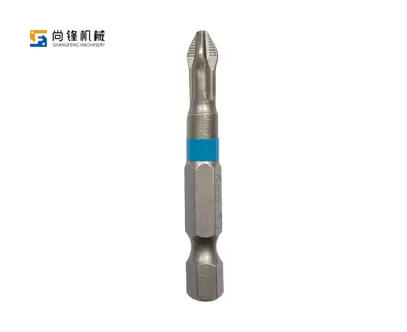
The right selection therefore requires more than matching “PH2” to “PH2.” The screw geometry, required torque, tool type, cycle frequency, bit length, shank size, hardness, toughness, and fastening environment all affect actual performance.
Torque Transfer Starts at the Bit-Screw Interface
During screwdriving, motor torque is transmitted from the tool holder through the bit and into the screw recess. Any loss of contact at this interface reduces effective torque transfer.
Cam-out occurs when the bit moves out of the screw recess as torque is applied. This can produce several secondary problems: damaged screw heads, damaged bit tips, inconsistent tightening, surface damage around the fastener, and production interruptions.
The ACR concept addresses this interface using ribs that engage with corresponding features in the screw recess. Wera describes ACR bits as having ribs at the drive tip that help prevent slipping out of the screw head and recommends pairing them with ribbed ACR screws for maximum effect.
For this reason, ACR performance should always be evaluated using the intended screw type.
High Torque Requires Controlled Deformation
The bit experiences torsional stress every time the tool applies torque.
If the applied torque exceeds the elastic limit of the bit material, permanent deformation can occur. Repeated operation below the failure torque can still produce fatigue and progressive wear.
This is why high-torque bit design requires a balance between strength and toughness.
An extremely hard tip may resist wear but can be vulnerable to fracture under impact. A tougher material may absorb transient loads more effectively but require careful control of surface hardness to maintain wear resistance.
Wera's ACR TZ design illustrates this approach by combining ACR ribs with a dedicated torsion zone intended to absorb peak torque loads.
For industrial applications, the optimum material condition should therefore be established through actual torque and cycle testing rather than selecting hardness as the only performance indicator.
Bit Length Changes the Mechanical Behavior
Bit length is not merely an access dimension.
A longer bit can provide access to recessed screws, but increasing the working length also changes the mechanical behavior of the component under torque. Longer geometries can experience greater deflection and may require appropriate shaft dimensions and material properties.
Commercial ACR bits are available in different lengths. For example, Wera lists PH2 ACR configurations at 25 mm, 50 mm and longer dimensions depending on the product design.
A short 25 mm bit can be suitable for compact power-tool holders, while a 50 mm or 70 mm bit may be more appropriate when the fastener is recessed or difficult to access.
The correct length should therefore be determined by the assembly geometry while maintaining adequate rigidity and torque capability.
1/4-Inch Hex Shank and Tool Compatibility
The tool interface must match the bit holder.
Many industrial ACR bits use a 1/4-inch hexagonal drive and are designed for standardized holders. Wera specifies 1/4-inch hex drives compatible with DIN ISO 1173 holder systems for several ACR products.
This matters in automated and semi-automated production because a loose or poorly matched holder can introduce runout or movement before torque reaches the screw.
The bit itself may have excellent tip geometry, but inconsistent holder engagement can still create unstable fastening behavior.
When qualifying a high-torque ACR bit, the holder should therefore be part of the test system.
The Role of Hardness and Heat Treatment
The working tip must retain its geometry under repeated loading.
Heat treatment determines important mechanical characteristics such as hardness and toughness. If the process is inconsistent, two visually identical bits can have different performance during high-cycle assembly.
The objective is not simply maximum hardness. The material must maintain sufficient toughness to withstand torsional and impact loads while retaining a tip profile capable of repeated engagement.
For a production supplier, hardness testing should therefore be combined with dimensional inspection and torque testing. Surface hardness alone cannot demonstrate complete bit performance.
Why Cold Forging Is Relevant
Shangfeng Machinery uses Taiwan cold-forging technology in its screwdriver-bit manufacturing process.
Cold forging can produce repeatable component geometry and is particularly useful where consistent dimensions are required across large production quantities. For ACR bits, this consistency is important because the rib profile and working tip must maintain controlled dimensions to achieve predictable engagement with the screw recess.
A production process should also control subsequent operations such as heat treatment, grinding, surface finishing, and inspection. The objective is to maintain the relationship between the tip geometry and the shank throughout the manufacturing process.
This becomes increasingly important when bits are used in automated assembly lines where small variations can accumulate across thousands of fastening cycles.
Matching Bit and Screw Size
A high-torque ACR bit does not compensate for an incorrectly sized screw interface.
If the bit is too small, contact area is reduced and the tip can move inside the recess. If the bit is too large, it may not seat correctly and can damage the recess.
Industrial ACR product ranges commonly cover multiple Phillips point sizes, including PH1, PH2, and PH3. Apex also provides ACR insert-bit configurations in different hex-drive formats and point sizes.
PH2 is widely encountered in general fastening, but the correct selection must be determined by the actual screw specification.
For high-torque applications, a proper fit is particularly important because torque magnifies the consequences of an imperfect interface.
High-Speed Automated Screwdriving
A manually controlled screwdriving process and an automated assembly line impose different demands.
Automated systems often operate at high cycle rates with controlled torque and limited opportunity for operator intervention. A cam-out event can stop the process, damage the component, or cause a defective fastening operation.
Semblex developed its ACR Phillips II system specifically with high-speed assembly applications in mind and identifies resistance to cam-out, lower required end-load, and extended drive-tool life among the system benefits.
This illustrates why bit selection should be connected to the complete assembly process.
Tool RPM, torque setting, axial force, screw feed accuracy, bit holder condition, screw orientation, and workpiece accessibility can all affect the actual load experienced by the bit.
When ACR Bits Provide the Most Value
ACR bits are particularly relevant when conventional Phillips bits experience repeated cam-out or recess damage.
Typical applications can include metal fabrication, machinery assembly, construction hardware, automotive components, appliances, electrical equipment, and high-volume industrial assembly.
They can also be useful when fasteners have coatings or surface contamination that makes stable recess engagement more difficult. Apex specifically identifies painted, coated, and corroded fasteners as challenging conditions where its ACR rib design is intended to reduce stripping and cam-out.
However, ACR is not a substitute for correct tool alignment or correct torque control. A badly misaligned driver can still create excessive side loading, and an incorrectly selected screw can still damage the bit.
How to Evaluate High-Torque ACR Bits
A useful qualification program should reproduce the actual application.
The test should use the intended screw material and surface treatment, the actual power tool, the intended holder, the specified torque, the normal rotational speed, and the expected axial load.
Performance can then be evaluated through several indicators: cam-out frequency, peak torque before interface failure, bit breakage, tip wear, screw-recess deformation, number of successful cycles, and fastening consistency.
For aerospace or other controlled applications, formal torque testing may follow defined procedures. Phillips Screw Company documentation, for example, references NASM 1312-25 for minimum and ultimate torque capability testing and specifies evaluation of the bit/recess interface and failure mode.
For general industrial applications, the exact test method should be selected according to the relevant fastener, tool, and product requirements.
Shangfeng Machinery for Industrial ACR Bit Production
Shangfeng Machinery Co., Ltd. specializes in screwdriver bits and related fastening accessories, including ratchet screwdrivers, nut sockets, bit holders, quick-change devices, and screwdriver-bit sets.
The company combines automated production equipment, high-precision inspection equipment, Taiwan cold-forging technology, and DIN and ANSI-oriented manufacturing. Its global supply experience and BSCI certification provide an established manufacturing framework for customers requiring consistent fastening components.
For ACR bits with high torque capacity, the important manufacturing objective is repeatability. Consistent tip geometry, controlled material properties, accurate shank dimensions, and reliable inspection help maintain predictable interaction between the bit and screw throughout repeated fastening cycles.
Conclusion
Choosing ACR bits with high torque capacity should begin with the fastening interface rather than the marketing description of the bit.
The ACR rib structure can improve engagement with compatible ACR screws and reduce cam-out, while high-torque performance depends on the combined effect of tip geometry, material, heat treatment, toughness, shank configuration, tool compatibility, and operating conditions.
For high-volume production, the most meaningful qualification is an application-based test that measures both torque capability and repeatability. When the bit, screw, holder, and power tool are properly matched, the ACR design can provide more stable torque transfer and reduce the secondary costs associated with stripped fasteners, damaged components, premature bit replacement, and interrupted assembly.