
 EN


A professional screwdriver bit is exposed to repeated mechanical stress every time it engages with a fastener. During daily industrial use, the tip experiences friction, rotational force, impact loading, and contact pressure. Over time, these forces can cause tip rounding, torsional deformation, surface wear, or complete breakage. For applications involving frequent fastening, the service life of the bit becomes an important factor in tool reliability and operating costs.
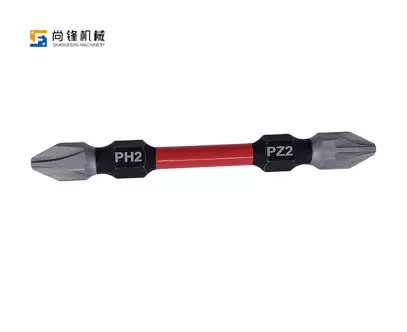
However, a longer-lasting professional screwdriver bit is not simply a product with higher hardness. Its durability depends on the combined performance of material selection, heat treatment, tip geometry, manufacturing precision, and application compatibility. Understanding these factors helps identify why some bits maintain stable performance over thousands of fastening cycles while others wear out much earlier.
Material Toughness and Hardness Must Be Balanced
Material selection establishes the mechanical foundation of a screwdriver bit. Professional products commonly use alloy tool steels because they can be processed to achieve the hardness and toughness required for fastening operations.
S2 steel is a widely used option for screwdriver bits. Its mechanical characteristics make it suitable for applications where resistance to wear and impact loading must be balanced. Other alloy steel grades may also be appropriate depending on the intended torque level, bit design, and working environment.
Hardness directly influences the resistance of the tip to surface deformation. When a bit is too soft, repeated contact with a screw recess can gradually round the working edges. This reduces engagement accuracy and increases the possibility of slipping.
Nevertheless, maximum hardness does not automatically mean maximum durability. A bit that is too brittle may fracture when exposed to sudden torque changes or impact loading. This is particularly relevant when the bit is used with an impact driver, where repeated impulses create additional mechanical stress.
For this reason, material selection should be based on the actual operating conditions. A professional screwdriver bit designed for manual assembly may require different mechanical characteristics from one intended for high-frequency power-tool applications.
Heat Treatment Controls Mechanical Performance
Heat treatment is one of the most influential manufacturing stages in determining screwdriver bit durability. Even when the correct steel grade is selected, inconsistent thermal processing can result in unstable hardness and reduced product reliability.
The objective is to achieve a suitable balance between surface hardness and internal toughness. The working tip must resist wear and deformation, while the body needs sufficient resistance to torsional stress.
Temperature control, heating duration, cooling conditions, and subsequent tempering all influence the final mechanical properties. If the process is not properly controlled, hardness variations may occur between batches or even across different sections of the same product.
For manufacturers, repeatable heat treatment is therefore essential. Hardness testing provides a measurable way to monitor production consistency, while torque and impact testing can help evaluate performance under application-related loading.
When comparing suppliers, buyers should look beyond statements such as hardened steel or high-strength material. More useful information includes the actual material grade, hardness specification, testing method, and quality-control procedures.
Why Tip Geometry Has a Major Impact on Wear
The working tip determines how effectively a professional screwdriver bit transfers torque to the fastener. Its geometry influences the contact area, engagement depth, and distribution of mechanical stress.
A poorly matched tip may only contact limited sections of the screw recess. Under rotational force, these concentrated contact points experience higher local pressure, increasing the risk of deformation and premature wear.
Torx bits are commonly selected for applications requiring stable torque transmission because their six-lobed geometry provides effective contact with compatible fasteners. Phillips bits are widely used in general assembly, while Pozidriv profiles offer additional engagement features compared with conventional Phillips designs. These profiles are not interchangeable, and using the wrong type can accelerate both bit wear and screw recess damage.
Dimensional accuracy is equally important. A tip that is slightly oversized may fail to enter the recess correctly, while an undersized tip can introduce excessive clearance. Both conditions reduce effective engagement.
Precision forming and inspection help maintain the geometry required for reliable fastening. Shangfeng Machinery Co., Ltd. uses Taiwan cold forging technology in its screwdriver bit manufacturing process, supported by automated production equipment and high-precision inspection instruments. This combination helps support consistent forming quality and dimensional control.
Manufacturing Accuracy and Shank Compatibility
Although the tip receives most of the mechanical attention, the shank also influences overall screwdriver bit performance. It connects the working end to the driving tool and must maintain reliable dimensional compatibility.
Common hexagonal shank configurations are designed for use with compatible screwdriver handles, electric screwdrivers, drill drivers, and bit holders. In many professional applications, 1/4-inch hex shanks are widely used, although the correct specification should always be confirmed against the tool and holder requirements.
Poor shank dimensional accuracy can result in excessive movement inside the holder, unstable rotation, or difficulties during bit replacement. In quick-change systems, compatibility becomes especially important because the bit must engage and release reliably without compromising retention during operation.
Cold forging offers manufacturers an efficient approach to forming metal components while maintaining controlled shapes. When combined with suitable tooling, process monitoring, and dimensional inspection, it can support consistent production of screwdriver bits and related accessories.
For customers purchasing professional screwdriver bits in bulk, shank dimensions, overall length, tip profile, and applicable DIN or ANSI requirements should all be included in the product specification.
Operating Conditions Also Affect Screwdriver Bit Lifespan
Even a well-manufactured professional screwdriver bit can wear prematurely if it is used outside its intended operating conditions.
One common cause of early failure is excessive torque. When the driving tool applies more force than the fastener and bit combination can accommodate, the tip may deform or the bit body may experience torsional damage. Torque settings should therefore be matched to screw size, material, and fastening requirements.
Another issue is incorrect alignment. If the screwdriver bit is not positioned along the fastener axis, uneven loading develops across the tip. This increases friction and may damage the screw recess. Consistent axial alignment is particularly important in automated assembly and repetitive fastening operations.
Using a worn bit also creates additional problems. As the working edges deteriorate, engagement becomes less precise, increasing the likelihood of cam-out. Replacing bits before severe wear occurs can help prevent fastener damage and production interruptions.
The operating environment should also be considered. Dust, metal particles, moisture, and abrasive contaminants can influence wear and corrosion, depending on the material and surface treatment. Selecting the appropriate bit finish and maintaining clean working conditions can help improve service life.
How to Evaluate a Professional Screwdriver Bit Supplier
Product durability is closely connected to manufacturing consistency. For distributors, tool brands, and industrial customers, evaluating the supplier's production capabilities is therefore an important part of sourcing.
A reliable supplier should be able to provide clear information about steel grades, heat treatment, dimensional standards, product configurations, and inspection procedures. Production equipment and quality-control capabilities also influence whether the supplier can maintain consistent specifications across repeat orders.
Shangfeng Machinery Co., Ltd. specializes in manufacturing screwdriver bits and related fastening tools, including ratchet screwdrivers, nut setters, bit holders, quick-change devices, and screwdriver bit sets. The company uses automated production equipment and high-precision testing instruments, together with Taiwan cold forging technology. Its products are manufactured according to DIN and ANSI standards to address different professional fastening requirements.
With products supplied to international markets and BSCI certification, the company provides manufacturing support for customers seeking standardized screwdriver bit products and related tool accessories.
Before placing a bulk order, it is advisable to confirm sample dimensions, material specifications, hardness requirements, packaging details, and batch inspection criteria. For customized products, drawings and tolerance requirements should be agreed upon before mass production.
Durability Is the Result of the Entire Manufacturing Process
The service life of a professional screwdriver bit is determined by more than one technical feature. Steel quality provides the foundation, heat treatment establishes the required mechanical properties, tip geometry controls engagement, and manufacturing precision ensures consistent dimensions. Correct application and operating practices further influence actual performance.
For professional fastening operations, selecting a durable bit means evaluating these factors together. A well-designed product should maintain reliable engagement, resist premature wear, and deliver consistent performance across repeated fastening cycles.
Shangfeng Machinery Co., Ltd. combines Taiwan cold forging technology, automated manufacturing equipment, and precision inspection capabilities to produce professional screwdriver bits and complementary fastening tools. By focusing on standardized production and manufacturing consistency, the company supports customers looking for dependable screwdriver bit solutions for professional tool applications.