
 EN
EN


In modern assembly and construction environments, the nut setter for power drills has become a critical interface between power tools and fastening systems. It is no longer a simple accessory but a precision torque-transfer component that directly influences fastening efficiency, torque accuracy, and fastener integrity.
As industries move toward higher assembly speeds and tighter mechanical tolerances, the performance requirements for nut setters have increased significantly. Applications in steel structure installation, HVAC systems, automotive subassembly, and industrial maintenance all demand consistent torque transmission under repetitive high-load conditions.
A high-quality nut setter must ensure stable engagement with fasteners, minimal cam-out risk, and long service life under continuous rotational stress.
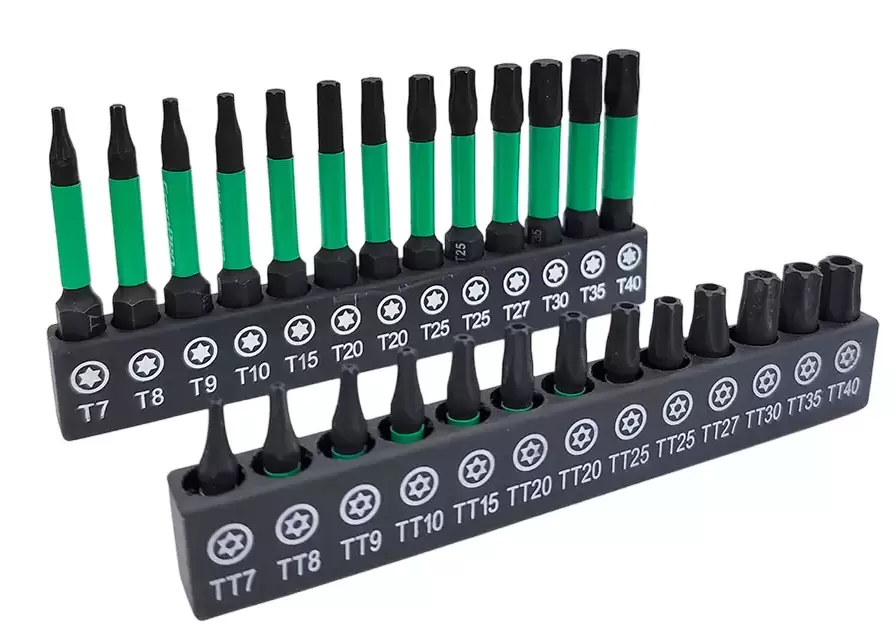
Torque Transfer Efficiency and Structural Design
The core function of a nut setter for power drills is to convert rotary torque from the drill into controlled fastening force applied to nuts or hex fasteners.
Typical industrial performance requirements include:
- Torque range compatibility: 5 Nm to 150 Nm depending on drill class
- Maximum rotational speed: 1,500–3,000 RPM
- Torque transmission efficiency: ≥90% under rated load
- Hex tolerance precision: ±0.02–0.05 mm
Even minor dimensional deviation in the hex socket geometry can lead to slippage, reduced torque transfer, and premature wear of both tool and fastener.
To optimize torque efficiency, advanced nut setters use:
- Deep broached internal hex geometry for full surface contact
- Precision cold-forged steel bodies for structural integrity
- Optimized wall thickness to balance strength and flexibility
Shangfeng Machinery Co., Ltd. applies Taiwan cold forging technology combined with DIN and ANSI standards to ensure consistent dimensional accuracy and mechanical strength across production batches.
Material Selection and Hardness Optimization
Material performance is one of the most critical factors affecting the durability of a nut setter for power drills.
Industrial-grade nut setters typically use:
- Chromium-vanadium steel (Cr-V)
- S2 tool steel for high-impact applications
- Heat-treated alloy steels for extended cycle life
Typical mechanical properties include:
- Surface hardness: HRC 50–58 (depending on application level)
- Core toughness: optimized to prevent brittle fracture under impact load
- Wear resistance: enhanced through precision heat treatment cycles
In high-volume fastening applications such as metal framing or industrial assembly lines, nut setters may experience thousands of torque cycles per day. Material fatigue resistance directly determines service life and tool reliability.
Anti-Slip Geometry and Fastener Engagement Stability
One of the most common failure modes in fastening systems is cam-out or slipping between the nut setter and fastener head. This leads to:
- damaged fastener edges
- reduced torque efficiency
- increased operator load
- premature tool wear
To address this, modern nut setter designs incorporate:
- precision-machined internal hex profiles
- chamfered entry angles for smoother engagement
- anti-slip rib geometry for load distribution
- optimized socket depth-to-width ratio
Standard socket engagement depth typically ranges from 8 mm to 25 mm depending on fastener size, ensuring stable mechanical coupling even under high-torque conditions.
Impact Resistance and Dynamic Load Behavior
Power drills generate not only rotational torque but also impact forces, especially in hammer or pulse-driven fastening modes.
A high-performance nut setter for power drills must withstand:
- repetitive torsional shock loading
- axial impact stress from tool vibration
- high-frequency rotational reversal in tightening/loosening cycles
Typical design solutions include:
- reinforced neck structure to prevent torsional cracking
- controlled elasticity in steel composition
- stress-distribution optimized geometry
In industrial environments, nut setters may undergo more than 10,000 fastening cycles per week, making fatigue resistance a critical design parameter.
Dimensional Accuracy and Manufacturing Standards
Precision manufacturing ensures compatibility with a wide range of fasteners and power tools.
Shangfeng Machinery produces nut setters under strict compliance with DIN and ANSI standards, ensuring global compatibility.
Key manufacturing tolerances include:
- hex socket dimensional tolerance: ±0.02 mm
- concentricity deviation: ≤0.03 mm
- runout control: ≤0.05 mm at high-speed rotation
Cold forging technology is used instead of traditional machining for improved grain structure alignment, resulting in:
- higher structural density
- improved torque resistance
- longer operational lifespan
Surface Treatment and Corrosion Resistance
Nut setters are frequently exposed to harsh environments such as construction sites, workshops, and outdoor installations.
Surface treatments typically include:
- black oxide coating for basic corrosion resistance
- phosphate coating for improved wear durability
- nickel plating for enhanced anti-rust performance
These coatings provide:
- reduced friction during fastener engagement
- extended tool lifespan in humid environments
- improved resistance to chemical exposure
In industrial storage and transportation conditions, corrosion resistance becomes essential for maintaining tool performance consistency.
Compatibility with Power Drill Systems
The nut setter for power drills must be compatible with various tool interfaces, including:
- 1/4” hex shank systems
- quick-change chuck systems
- magnetic holder extensions
- impact driver systems
Key compatibility requirements include:
- secure shank locking under high torque
- minimal wobble during rotation (≤0.1 mm deviation)
- stable magnetic retention for fastener positioning
Compatibility across multiple drill platforms ensures versatility in field applications and industrial assembly operations.
Application Scenarios Across Industries
Nut setters are widely used in:
- steel structure installation
- HVAC duct and bracket assembly
- automotive subassembly lines
- electrical cabinet installation
- furniture and modular structure assembly
Each application requires different performance priorities:
- construction environments prioritize durability and impact resistance
- manufacturing lines prioritize speed and consistency
- maintenance applications prioritize compatibility and versatility
Quality Control and Batch Consistency
Shangfeng Machinery Co., Ltd. ensures product consistency through advanced manufacturing and inspection systems, including:
- automated dimensional inspection
- torque resistance testing
- hardness validation after heat treatment
- fatigue cycle testing under load conditions
Batch consistency is critical for industrial procurement, where tool variation can directly impact assembly line efficiency and fastening quality.
Conclusion
The nut setter for power drills is a precision-engineered fastening interface that plays a critical role in industrial assembly efficiency and mechanical reliability.
Its performance is defined by:
- torque transfer efficiency and geometric precision
- high-strength alloy material selection
- impact and fatigue resistance
- anti-slip engagement design
- strict dimensional manufacturing control
With advanced cold forging technology and standardized production systems, modern nut setters are evolving from simple accessories into high-performance industrial fastening components capable of supporting demanding global applications.