
 EN
EN


In high-frequency fastening operations, efficiency is rarely limited by the primary tool. Instead, it is often constrained by interface components—particularly the magnetic bit holder. Whether in automotive assembly, construction, or industrial manufacturing, the bit holder directly influences torque transmission, bit retention, and operator efficiency.
For procurement teams and engineers, selecting a magnetic bit holder is not a commodity decision. Variations in material hardness, magnet strength, concentricity, and quick-change mechanisms can significantly affect production stability, tool lifespan, and even fastening accuracy.
This article focuses on the technical parameters that truly matter when selecting a magnetic bit holder for industrial environments, helping decision-makers align product specifications with real operational demands.
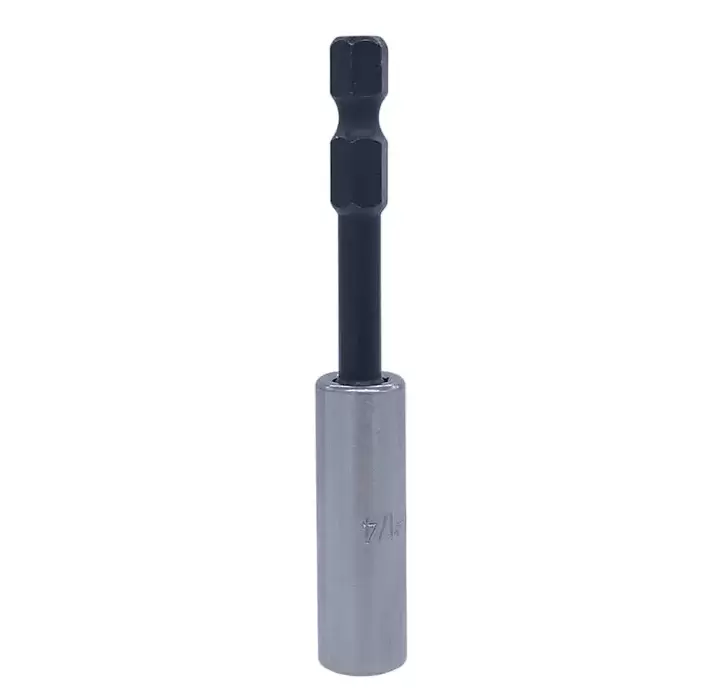
Functional Role: Beyond Bit Retention
A magnetic bit holder performs three core functions simultaneously: mechanical coupling, torque transmission, and bit retention. In practice, these functions must operate under dynamic conditions, including vibration, repeated load cycles, and variable torque output.
The magnetic mechanism is typically based on a permanent magnet embedded inside the holder. However, the effectiveness of this system depends not only on magnet strength but also on internal structural design. Poor alignment or insufficient depth can lead to unstable bit positioning, resulting in wobble and reduced fastening precision.
In automated or semi-automated assembly lines, even minor inconsistencies in bit alignment can lead to cumulative defects. Therefore, the bit holder must maintain axial stability and consistent magnetic force under repeated use.
Material Engineering: Steel Quality and Heat Treatment
The performance of a magnetic bit holder begins with material selection. Most high-quality holders are manufactured from S2 alloy steel or Cr-V steel, both known for their balance of toughness and wear resistance.
However, raw material alone does not determine durability. Heat treatment processes play a critical role in achieving the desired hardness range, typically between HRC 58–62. This hardness ensures resistance to deformation under torque while maintaining sufficient toughness to prevent brittle fracture.
Manufacturers such as Shangfeng Machinery Co., Ltd. utilize advanced cold forging processes combined with precision heat treatment to achieve uniform grain structure. This results in improved fatigue resistance, particularly in high-cycle applications.
For procurement teams, verifying hardness consistency across batches is more important than peak hardness values.
Magnetic Strength: Retention vs Practical Usability
Magnetic strength is often misunderstood as “the stronger, the better.” In reality, optimal magnetic force must balance retention with usability.
Typical industrial magnetic bit holders use neodymium magnets, offering strong magnetic fields in compact dimensions. However, excessive magnetic force can cause operational inefficiencies, such as difficulty in releasing bits or interference with small fasteners.
A well-designed magnetic bit holder provides:
- Stable bit retention during vertical or overhead operation
- Minimal bit drop during vibration
- Controlled release for quick bit changes
In high-speed assembly environments, this balance directly impacts cycle time and operator fatigue.
Torque Transmission and Concentricity
Torque transmission efficiency depends on the precision of the hex interface and overall concentricity of the holder.
A poorly machined bit holder introduces radial runout, which leads to:
- Uneven torque distribution
- Increased bit wear
- Reduced fastening accuracy
High-precision manufacturing ensures tight tolerances, typically within ±0.02 mm concentricity, enabling stable torque transfer even at high rotational speeds.
For applications involving power tools or automated drivers, maintaining concentric alignment is essential for both performance and tool longevity.
Quick-Change Mechanisms: Efficiency in High-Volume Operations
Quick-change magnetic bit holders are widely used in environments where multiple bit types are required. These systems typically use a sliding sleeve or locking collar to secure and release bits.
From an engineering perspective, the mechanism must satisfy three criteria:
- Secure locking under torque
- Smooth release without excessive force
- Durability over repeated cycles (often exceeding 50,000 operations)
In automated production lines, inconsistent quick-change performance can lead to downtime and increased maintenance.
Shangfeng’s product lines incorporate precision-machined locking systems designed to maintain performance consistency over extended use, supporting both manual and automated workflows.
Application-Specific Considerations
Different industries impose distinct requirements on magnetic bit holders.
In construction environments, durability and corrosion resistance are critical. Tools are exposed to dust, moisture, and impact, requiring robust surface treatments such as black oxide or phosphate coating.
In automotive assembly, precision and repeatability are prioritized. Bit holders must maintain alignment and torque consistency across thousands of fastening cycles.
In electronics manufacturing, compact size and fine control are essential. Smaller bit holders with optimized magnetic force are preferred to avoid damaging delicate components.
Selecting a magnetic bit holder without considering these application-specific factors often results in performance mismatches.
Automation Compatibility: A Growing Requirement
As manufacturing shifts toward automation, compatibility with robotic and semi-automated systems becomes increasingly important.
Automated screwdriving systems require bit holders with:
- Consistent dimensional tolerances
- Reliable magnetic retention under vibration
- Compatibility with standardized tool interfaces (DIN, ANSI)
Variability in holder dimensions can disrupt automated feeding systems, leading to inefficiencies.
Shangfeng Machinery’s adherence to DIN and ANSI standards ensures compatibility with global tooling systems, reducing integration risks for international manufacturers.
Quality Control and Manufacturing Consistency
In large-scale procurement, consistency is often more valuable than peak performance. Variability between batches can disrupt production and increase defect rates.
Key quality indicators include:
- Uniform hardness distribution
- Consistent magnetic force
- Precision machining without burrs
- Surface finish quality
Advanced manufacturers implement multi-stage inspection processes, including torque testing and dimensional verification.
For buyers, requesting batch testing reports and certifications such as BSCI compliance provides additional assurance.
Total Cost of Ownership: A Practical Evaluation
While magnetic bit holders are relatively low-cost components, their impact on overall productivity is significant.
Low-quality holders may lead to:
- Increased bit wear
- Higher replacement frequency
- Reduced fastening accuracy
- Production downtime
In contrast, high-quality holders reduce maintenance requirements and improve operational efficiency.
For high-volume production environments, even marginal improvements in reliability can translate into substantial cost savings over time.
Conclusion: Engineering Precision in a Small Component
The magnetic bit holder is often overlooked, yet it plays a critical role in fastening performance and production efficiency. Selecting the right product requires a detailed understanding of material properties, magnetic design, machining precision, and application requirements.
For procurement teams, engineers, and project managers, the goal is to move beyond generic specifications and focus on measurable performance indicators.
A well-designed magnetic bit holder is not just an accessory—it is a key enabler of precision, efficiency, and reliability in modern manufacturing.