
 EN
EN


Choosing the right ratchet wrench manufacturer China is not simply a matter of comparing unit prices. For distributors, tool brands, industrial users, and OEM projects, the real evaluation should focus on torque performance, ratchet mechanism reliability, material selection, dimensional accuracy, surface treatment, production consistency, and quality-control capability. A ratchet wrench may appear mechanically simple, but the interaction between the gear, pawl, drive square, handle, and internal spring system determines whether the tool can deliver reliable performance after thousands of operating cycles.
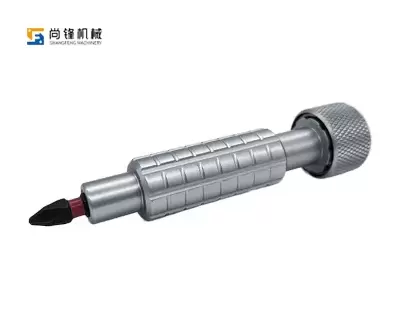
For buyers sourcing from China, understanding the manufacturing process and technical specifications behind a ratchet wrench can significantly reduce quality risks. A manufacturer with controlled forging, heat treatment, CNC machining, assembly, and inspection processes is more likely to provide consistent performance across large production batches.
What Defines a High-Quality Ratchet Wrench?
A ratchet wrench converts a relatively small handle movement into repeated tightening or loosening operations without requiring the user to remove the tool from the fastener. The mechanism normally consists of a toothed gear, pawl, spring, drive head, and handle structure.
The most important performance parameters are not limited to the external dimensions. Buyers should consider drive size, tooth count, working angle, maximum torque, backdrag, gear engagement, material hardness, dimensional tolerance, and cycle life.
For example, a 72-tooth ratchet typically provides a working swing angle of approximately 5°, while a 36-tooth mechanism requires approximately 10°. A finer tooth mechanism is advantageous when working inside restricted spaces because the operator can tighten a fastener with smaller handle movement.
However, a higher tooth count also requires precise gear and pawl manufacturing. If tooth geometry is poorly controlled or heat treatment is inconsistent, the theoretical advantage of a fine-tooth mechanism can be offset by premature wear or tooth damage.
Cold Forging Creates a Stronger Mechanical Foundation
The manufacturing process has a direct influence on ratchet wrench performance.
Cold forging can produce a dense and mechanically strong metal structure while forming the basic geometry of the tool component. Compared with manufacturing the entire component from a machined block, forging can reduce material waste and provide favorable grain flow around areas exposed to mechanical loading.
For ratchet components, this is particularly relevant around the drive head and transition between the head and handle, where repeated torque creates localized stress.
Shangfeng Machinery uses Taiwan cold forging technology for its screwdriver bits and related tool components. Combined with automated production equipment and precision inspection systems, this type of manufacturing approach can support stable dimensional quality for high-volume tool production.
The final mechanical performance still depends on subsequent heat treatment, machining accuracy, surface treatment, and assembly quality.
Material Selection Affects Torque and Service Life
Common ratchet wrench materials include chrome vanadium steel and other alloy steel grades selected for strength, toughness, wear resistance, and heat-treatment compatibility.
A high-strength material alone does not guarantee a reliable tool. The hardness and toughness need to be balanced according to the component's function.
The gear and pawl require sufficient surface hardness to resist repeated contact and tooth wear. At the same time, excessive hardness without sufficient toughness can increase the risk of cracking or brittle failure under impact loading.
The handle has different requirements because it must withstand bending and torsional loads while maintaining a comfortable form for manual operation.
For this reason, different components can require different material conditions or heat-treatment strategies even within the same ratchet wrench assembly.
Gear Tooth Accuracy Is Critical
The ratchet mechanism depends on controlled engagement between the gear teeth and pawl.
If the tooth profile is inaccurate, the contact area between the two components may be reduced. This can increase localized contact stress and accelerate wear.
Dimensional consistency also affects switching performance. The mechanism must alternate between tightening and free-return movement without excessive play.
Excessive backlash can make the tool feel loose and reduce control during precision fastening. Insufficient clearance, on the other hand, can increase friction and make the ratchet difficult to operate.
This is why precision inspection of gear diameter, tooth geometry, drive dimensions, and mating components is essential during production.
Drive Size Must Match the Intended Application
Ratchet wrench drive sizes commonly include 1/4-inch, 3/8-inch, and 1/2-inch configurations, with larger formats used for heavier applications.
A 1/4-inch drive is generally suitable for smaller fasteners and confined assemblies. A 3/8-inch drive provides a broader balance between compactness and torque capacity. A 1/2-inch drive is commonly selected for higher-load automotive, machinery, and industrial fastening applications.
The appropriate drive size should be determined according to the required torque range and socket compatibility rather than simply selecting the largest available size.
A larger drive does not automatically make the complete tool better. It may increase head dimensions and reduce accessibility in confined areas.
Torque Testing Should Reflect Real Operating Conditions
Torque is one of the most important performance indicators for a ratchet wrench, but a single maximum torque value does not fully describe tool reliability.
A production test should evaluate whether the mechanism can transmit the required torque without tooth deformation, pawl slippage, drive-square damage, or permanent handle deformation.
Repeated-cycle testing can provide additional information about long-term reliability. A ratchet mechanism that performs well during one static torque test may still develop excessive backlash or tooth wear after thousands of cycles.
For OEM and private-label programs, establishing a defined torque range and cycle-testing requirement before mass production can make supplier evaluation much more objective.
Surface Treatment Protects the Tool During Use
Ratchet wrenches are frequently exposed to oil, moisture, dust, and mechanical abrasion. Surface treatment therefore influences both corrosion resistance and appearance.
Chrome plating, nickel-based finishes, black oxide, and other surface treatments can be selected according to application requirements.
A polished chrome surface may be appropriate for general hand tools where corrosion resistance and appearance are both important. Other finishes may be preferred for industrial environments or specific brand requirements.
The surface treatment should also be evaluated for adhesion and consistency. Uneven coating thickness or poor pretreatment can lead to premature corrosion or surface peeling.
Quality Control Should Cover the Complete Production Chain
A reliable ratchet wrench manufacturer China should have quality control extending from raw material inspection through finished-product testing.
Incoming steel should be verified against the required material specification. Forged components should be inspected for dimensional consistency and visible defects. Heat-treated parts should be monitored for hardness and mechanical characteristics. Machined components should be checked against critical tolerances.
During assembly, gear, pawl, spring, and drive components need to be properly matched. Final testing can include torque testing, ratchet function testing, dimensional inspection, surface inspection, and packaging verification.
Shangfeng Machinery has introduced automated tool-production equipment and high-precision inspection equipment to support manufacturing consistency. Its products are manufactured according to DIN and ANSI standards, providing a reference framework for international tool requirements.
Why Manufacturing Scale Matters for OEM Projects
For an OEM or private-label program, supplier consistency is often more important than the performance of one sample.
A buyer may approve a prototype that performs correctly, but the real challenge begins when tens of thousands of units need to maintain the same dimensions, surface finish, mechanism feel, and torque performance.
Automated production can reduce operator-dependent variation. Standardized processes and inspection equipment can further improve batch-to-batch consistency.
A manufacturer should therefore be evaluated according to its ability to maintain specifications across production volumes rather than based only on sample quality.
Choosing a Ratchet Wrench Manufacturer China
A suitable supplier should be able to provide clear technical specifications covering material, drive size, tooth count, torque requirements, dimensions, surface finish, applicable standards, packaging, and inspection criteria.
For projects requiring customized handles, logos, packaging, drive configurations, or complete tool sets, engineering communication becomes equally important.
Shangfeng Machinery specializes in screwdriver bits, ratchet screwdrivers, sockets, bit holders, quick-change devices, screwdriver bit sets, and related tool accessories. Its use of Taiwan cold forging technology, automated production equipment, precision inspection systems, DIN and ANSI production requirements, and BSCI certification provides a manufacturing foundation for international customers.
Conclusion
Selecting a ratchet wrench manufacturer China should be based on measurable manufacturing and performance capabilities rather than price alone. Gear accuracy, material properties, heat treatment, torque capacity, tooth count, surface treatment, assembly precision, and cycle testing all influence the reliability of the finished tool.
For international buyers, the strongest supplier is one capable of translating a required application into controlled specifications and maintaining those specifications throughout mass production. A manufacturer with established forging technology, automated production, precision inspection, and international quality standards can provide a more predictable foundation for OEM, private-label, and industrial tool programs.