In industrial assembly, equipment maintenance, automotive manufacturing, and construction projects, screwdriver bits are subjected to continuous mechanical stress. Whether they are used with cordless screwdrivers, electric drivers, pneumatic tools, or automated fastening systems, the performance of the bit directly affects fastening accuracy, production efficiency, and maintenance costs.
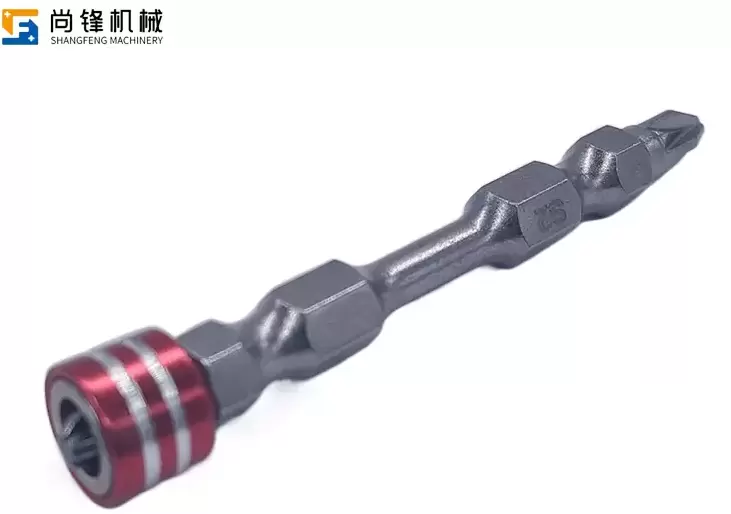
Although many screwdriver bits appear similar, their actual performance can vary significantly due to differences in manufacturing processes, material quality, heat treatment, and dimensional precision. This is why DIN standard screwdriver bits have become the preferred choice for many professional users. Manufactured according to standardized specifications, they offer better compatibility, more consistent performance, and greater reliability across a wide range of fastening applications.
However, selecting the right DIN standard screwdriver bit requires more than checking whether it complies with a standard. Buyers should evaluate several technical factors, including material properties, torque capacity, dimensional accuracy, wear resistance, and manufacturing consistency. Understanding these factors helps ensure that the selected bits deliver stable performance throughout their service life.
DIN Standards Ensure Consistent Compatibility
One of the biggest advantages of DIN standard screwdriver bits is dimensional consistency. In industrial production, screws, tools, and automated equipment are designed to work together with minimal tolerance variation. Even slight dimensional differences between the screwdriver bit and the screw recess can reduce torque transfer efficiency and increase the risk of fastener damage.
DIN standards define important characteristics such as:
- Tip dimensions
- Overall bit length
- Drive interface dimensions
- Manufacturing tolerances
- Functional compatibility
Because these parameters are standardized, DIN screwdriver bits can be used with a wide variety of professional fastening equipment without requiring customized tooling.
For automated assembly lines, this consistency is particularly important. Production equipment depends on repeatable positioning and stable engagement to maintain high-speed operation and minimize downtime.
Material Selection Has a Direct Impact on Performance
The material used to manufacture a screwdriver bit determines its ability to withstand repeated torque loads without excessive wear or failure.
Professional DIN standard screwdriver bits are commonly produced from high-grade alloy steels that combine hardness with impact resistance. The goal is to create a tool that maintains its tip geometry while resisting cracking under demanding working conditions.
Several material characteristics influence performance.
Hardness
Adequate hardness allows the bit tip to resist deformation during repeated fastening cycles.
If hardness is too low, the tip may round off quickly, reducing engagement with the screw head. This increases cam-out and may damage both the fastener and the workpiece.
Toughness
While hardness improves wear resistance, toughness prevents brittle fracture.
Bits used with impact drivers experience repeated shock loads. A tough material absorbs these impacts more effectively and extends service life.
Wear Resistance
Wear resistance is essential in high-volume assembly environments where thousands of screws may be installed every day.
A wear-resistant bit maintains consistent fastening performance and reduces replacement frequency, helping lower operating costs.
Cold Forging Produces Stronger Screwdriver Bits
Manufacturing technology is just as important as raw material selection.
Shangfeng Machinery Co., Ltd. adopts Taiwan cold forging technology to manufacture screwdriver bits. Unlike conventional machining methods, cold forging forms the steel under high pressure while preserving the continuity of the metal grain structure.
This manufacturing process offers several performance advantages:
- Higher structural density
- Improved mechanical strength
- Better fatigue resistance
- More consistent dimensional accuracy
- Enhanced impact durability
Because the material is compressed rather than cut away, cold-forged bits generally perform better under repeated torque loading than products manufactured using less advanced processes.
This makes them particularly suitable for industrial production lines where reliability and long service life are essential.
Heat Treatment Determines the Balance Between Hardness and Toughness
Heat treatment is one of the most critical production stages for DIN standard screwdriver bits.
Proper heat treatment creates a balanced microstructure that combines surface hardness with internal toughness.
If the bit is overheated during heat treatment, excessive brittleness may develop, increasing the risk of fracture. If the process is insufficient, the bit may wear rapidly under normal working conditions.
Manufacturers with advanced heat treatment control can optimize:
- Surface hardness
- Core toughness
- Fatigue resistance
- Dimensional stability
This balance enables screwdriver bits to perform reliably across a wide range of fastening applications.
Precision Tip Geometry Improves Torque Transfer
The efficiency of any screwdriver bit depends on how accurately its tip fits the corresponding fastener.
Poor tip geometry can result in:
- Reduced contact area
- Higher stress concentration
- Increased screw head wear
- Lower torque transmission
- More frequent cam-out
DIN standard screwdriver bits are manufactured with precise tip profiles to maximize engagement with the fastener.
Accurate geometry distributes fastening force more evenly, reducing localized stress and improving both fastening quality and tool life.
For applications involving automated electric screwdrivers, consistent tip accuracy also improves production repeatability and reduces rejected assemblies.
Surface Finishing Extends Working Life
Industrial fastening tools are often exposed to demanding environments that include moisture, oils, dust, and frequent handling.
Surface treatments improve the durability of screwdriver bits by increasing resistance to corrosion and abrasion.
Common benefits include:
- Better oxidation resistance
- Reduced surface wear
- Improved appearance
- Longer storage life
A high-quality surface finish also helps maintain smooth engagement with screws throughout the product's service life.
Selecting Screwdriver Bits for Different Industrial Applications
Different industries place different demands on screwdriver bits.
Automotive Manufacturing
Vehicle assembly requires high fastening consistency because every screw contributes to overall product reliability.
DIN standard screwdriver bits help maintain stable torque transmission during large-scale production while reducing the possibility of damaged fasteners.
Electronics Assembly
Electronic products contain numerous precision screws installed in compact spaces.
High-dimensional accuracy allows better engagement with miniature fasteners while minimizing the risk of slipping or component damage.
Industrial Equipment Manufacturing
Heavy machinery often uses high-strength fasteners requiring greater tightening torque.
Durable screwdriver bits with optimized heat treatment provide reliable performance during repeated assembly operations.
Maintenance and Repair Services
Maintenance technicians frequently remove and reinstall fasteners.
Long-lasting screwdriver bits improve efficiency by maintaining consistent tip geometry throughout repeated service cycles.
Quality Inspection Supports Consistent Batch Performance
Reliable screwdriver bit manufacturing depends on comprehensive quality control rather than visual inspection alone.
Professional manufacturers should verify key performance characteristics throughout production, including:
- Dimensional accuracy
- Hardness consistency
- Torque performance
- Surface quality
- Material integrity
Shangfeng Machinery Co., Ltd. integrates advanced automated manufacturing equipment with high-precision inspection systems to ensure every production batch meets DIN and ANSI requirements.
Its product portfolio includes screwdriver bits, ratchet screwdrivers, nut sockets, bit holders, quick-change adapters, and screwdriver bit sets. Supported by BSCI certification and extensive export experience, the company supplies professional fastening solutions to customers worldwide.
Why Manufacturing Capability Should Influence Supplier Selection
Choosing a screwdriver bit supplier involves evaluating more than the product itself. Long-term supply stability depends on manufacturing capability, process control, and technical expertise.
A reliable supplier should demonstrate:
- Compliance with DIN and ANSI standards
- Advanced production equipment
- Stable heat treatment processes
- Precision inspection capability
- Consistent delivery performance
Manufacturers with integrated production systems can maintain tighter quality control, ensuring consistent product performance across large-volume orders.
Conclusion: DIN Standard Screwdriver Bits Deliver Long-Term Value Through Precision Manufacturing
High-quality DIN standard screwdriver bits provide far more than standardized dimensions. Their performance depends on material selection, cold forging technology, heat treatment, precision machining, and rigorous quality control.
By combining accurate tip geometry with optimized mechanical properties, these screwdriver bits deliver reliable torque transmission, extended service life, and consistent fastening performance across demanding industrial applications.
For companies seeking dependable fastening tools, selecting an experienced manufacturer with advanced production technology and comprehensive quality management is the most effective way to improve assembly efficiency, reduce maintenance costs, and ensure long-term operational reliability.

 EN
EN


