
 EN
EN


In modern industrial assembly, construction, automotive maintenance, and manufacturing operations, screwdriver bits are small components that directly influence fastening efficiency, product quality, and equipment reliability. Although a screwdriver bit may appear simple, its dimensional accuracy, material performance, and manufacturing consistency determine whether it can withstand repeated high-torque applications without deformation or premature failure.
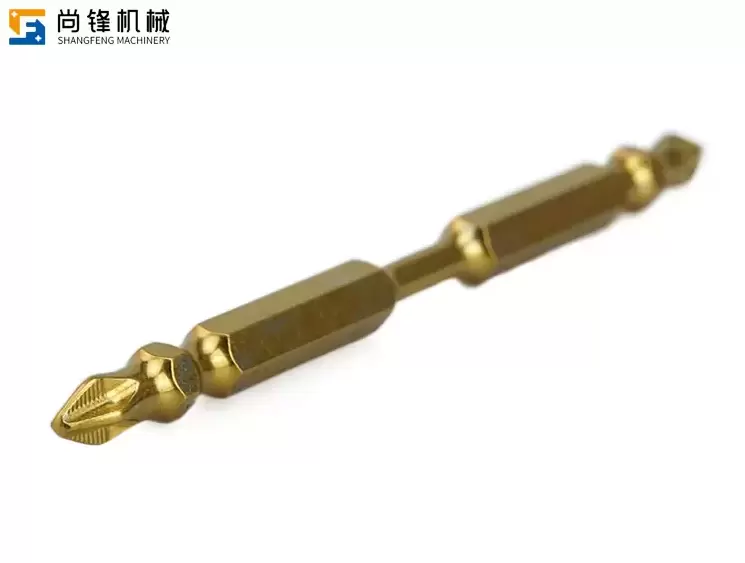
DIN standard screwdriver bits are widely recognized in professional tool applications because they are manufactured according to established German industrial standards, ensuring reliable dimensions, compatibility, and performance consistency. For companies using power tools, automated assembly equipment, or professional maintenance systems, DIN-standardized bits provide a stable solution for achieving accurate fastening operations.
However, meeting DIN requirements is not only about producing a bit with the correct shape. High-performance screwdriver bits require precise cold forging technology, controlled heat treatment, accurate machining, and strict inspection processes. Manufacturing capability directly affects critical performance factors such as torque transmission, wear resistance, and service life.
Understanding DIN Standards in Screwdriver Bit Manufacturing
DIN, or Deutsches Institut für Normung, represents a widely applied industrial standard system originating from Germany. In the tool industry, DIN standards help define product dimensions, mechanical performance requirements, and compatibility specifications.
For screwdriver bits, standardization mainly focuses on factors such as:
- Tip geometry accuracy
- Dimensional consistency
- Fit between bit and screw head
- Mechanical strength
- Application reliability
A precisely manufactured DIN standard screwdriver bit ensures proper engagement between the bit tip and fastener. This reduces problems such as slipping, cam-out, and uneven force distribution.
In industrial environments where thousands or millions of screws are installed during production, even minor dimensional deviations can increase failure rates, damage fasteners, and reduce assembly efficiency. Therefore, DIN compliance provides an important foundation for reliable fastening performance.
Precision Cold Forging Improves Screwdriver Bit Strength
The manufacturing process has a significant influence on screwdriver bit durability. Compared with simple machining methods, cold forging technology creates a stronger internal metal structure by forming the material under controlled pressure.
Shangfeng Machinery Co., Ltd. uses Taiwan cold forging technology for screwdriver bit production, allowing the company to manufacture high-quality tools with improved mechanical properties.
Cold forging provides several advantages:
- Higher material density
- Improved structural strength
- Better resistance to impact loads
- Reduced material waste
- More consistent dimensions
During fastening operations, screwdriver bits experience repeated torsional stress. A cold-forged structure helps distribute these forces more effectively and reduces the risk of cracking or sudden breakage.
For professional applications using electric screwdrivers or impact drivers, this manufacturing advantage becomes especially important because the bit must withstand rapid torque changes and repeated loading cycles.
Material Selection Determines Torque Capacity and Service Life
The material used for DIN standard screwdriver bits directly affects performance. Professional-grade bits typically require steel materials that provide a balance between hardness and toughness.
A screwdriver bit that is too soft may experience:
- Tip deformation
- Faster wear
- Reduced engagement accuracy
A bit that is excessively hard may become brittle and prone to fracture under impact loads.
Therefore, manufacturers must optimize material composition and heat treatment processes to achieve the right mechanical balance.
Important performance characteristics include:
Hardness Control
Proper hardness improves wear resistance and helps maintain tip geometry after repeated use.
For example, in industrial assembly environments, a screwdriver bit may engage thousands of fasteners. Maintaining tip shape is essential for consistent torque transmission.
Toughness Performance
Toughness allows the bit to absorb impact forces without sudden failure. This is particularly important for applications involving electric impact tools.
Fatigue Resistance
Repeated fastening cycles create continuous stress on the bit. High fatigue resistance helps extend service life and reduce replacement frequency.
Tip Accuracy Directly Affects Fastening Efficiency
The connection between the screwdriver bit and screw head is a critical performance point. A high-quality DIN standard screwdriver bit must maintain precise tip geometry to ensure proper contact.
Poorly manufactured tips can cause:
- Screw head damage
- Reduced torque transfer
- Increased operator fatigue
- Higher replacement costs
Precision manufacturing ensures that the bit fits securely into different fastener types, including:
- Phillips screws
- Pozidriv screws
- Torx screws
- Hex fasteners
For automated assembly lines, consistent tip dimensions are especially important because equipment depends on predictable tool performance.
A small dimensional variation can affect the stability of the entire fastening process, leading to production interruptions or quality problems.
Surface Treatment Enhances Wear and Corrosion Resistance
Professional screwdriver bits often operate in demanding environments where they may be exposed to moisture, dust, chemicals, or frequent handling.
Surface treatment technologies help improve:
- Corrosion resistance
- Surface hardness
- Wear resistance
- Appearance durability
A suitable surface treatment extends the working life of the bit and helps maintain performance during long-term storage and repeated use.
For global tool markets, corrosion resistance is also important because products may experience different transportation and environmental conditions before reaching end users.
DIN Standard Screwdriver Bits in Industrial Applications
The demand for reliable screwdriver bits continues to grow across multiple industries.
Automotive Manufacturing
Automotive assembly requires precise fastening because component reliability directly affects vehicle safety.
DIN standard screwdriver bits are used in applications such as:
- Interior component assembly
- Electronic module installation
- Mechanical fastening processes
Consistent torque transmission helps improve assembly quality and reduce production defects.
Electronics Manufacturing
Electronic products often contain small precision screws requiring accurate fastening control.
High-quality bits help prevent:
- Screw damage
- Component damage
- Assembly inconsistencies
Machinery and Equipment Maintenance
Industrial maintenance operations require tools that can withstand frequent use.
Durable DIN standard screwdriver bits reduce downtime caused by tool failure and improve maintenance efficiency.
Construction and Professional Installation
Construction professionals require reliable tools that can maintain performance under demanding working conditions.
High-strength screwdriver bits provide better durability for repeated fastening tasks.
Quality Control Ensures Consistent Batch Performance
For professional tool buyers, consistency between production batches is as important as individual product performance.
A reliable DIN standard screwdriver bits manufacturer should implement strict quality control throughout production.
Important inspection processes include:
- Dimensional measurement
- Hardness testing
- Torque testing
- Surface inspection
- Functional verification
Shangfeng Machinery Co., Ltd. integrates advanced automated tool production equipment and high-precision inspection systems to ensure stable product quality.
The company produces screwdriver bits, ratchet screwdrivers, socket accessories, bit holders, quick-change devices, and screwdriver bit sets according to DIN and ANSI standards. With BSCI certification and global supply experience, Shangfeng Machinery supports customers requiring reliable tool solutions for professional applications.
Why Manufacturing Expertise Matters When Choosing DIN Standard Screwdriver Bits
Selecting screwdriver bits is not only about purchasing a standard component. The actual performance depends on manufacturing technology, material control, and quality management.
A professional supplier should provide:
- Standard-compliant production
- Stable mechanical performance
- Consistent dimensional accuracy
- Reliable delivery capability
- Technical support for different applications
For companies requiring large-volume tool supply, working with an experienced manufacturer reduces quality risks and improves long-term product reliability.
Conclusion: DIN Standard Screwdriver Bits Deliver Reliable Performance Through Precision Engineering
DIN standard screwdriver bits represent a combination of standardized design, precise manufacturing, and optimized material performance. Their value comes not only from meeting dimensional requirements but also from providing stable torque transmission, long service life, and reliable fastening performance in demanding applications.
Through advanced cold forging technology, strict quality inspection, and professional manufacturing experience, high-quality DIN standard screwdriver bits can help industries improve assembly efficiency, reduce tool replacement costs, and maintain consistent production quality.
For global tool users seeking dependable fastening solutions, choosing a manufacturer with strong engineering capability and proven production experience is essential to achieving long-term performance.