
 EN
EN


High-speed industrial assembly lines are designed around one principle: consistency at scale. Every station, every tool, and every component must perform predictably—thousands of times per shift. As fastening speeds increase and cycle times shrink, even small inefficiencies become costly. In this environment, the humble screwdriver bit plays a much larger role than many production planners realize.
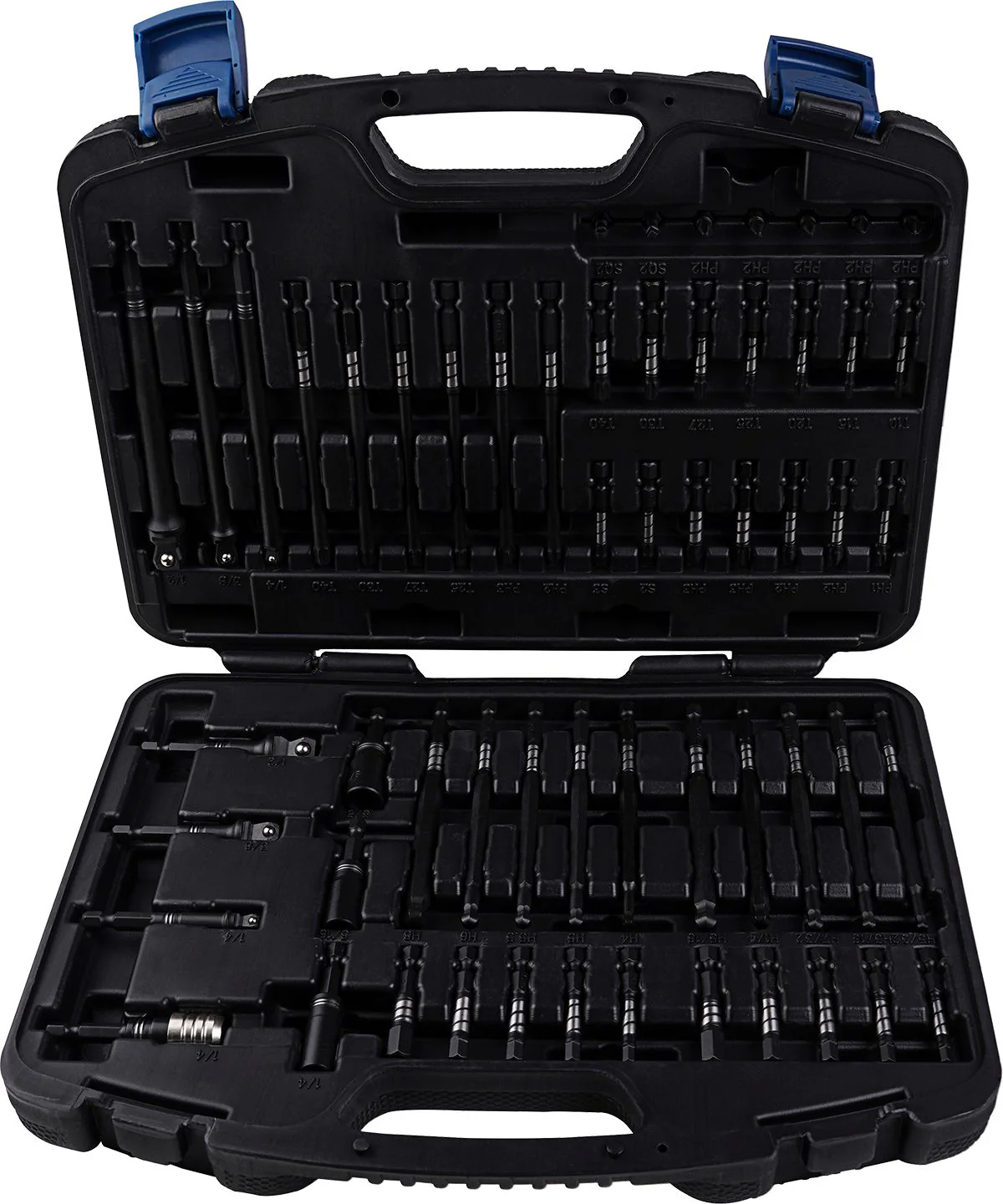
Standard impact bits often struggle to keep up with modern assembly demands. Breakage, cam-out, inconsistent torque transfer, and premature wear can all interrupt flow. Impact torsion bits, by contrast, are engineered specifically to address the mechanical realities of high-speed, repetitive fastening. This article explains why torsion bits matter on industrial assembly lines and how they contribute to uptime, quality stability, and process control.
Why Assembly Lines Stress Fastening Tools Differently
Industrial assembly lines differ from jobsite work in three critical ways:
Repetition – The same fastening action is repeated hundreds or thousands of times with minimal variation.
Speed – Impact drivers and automated tools operate at high RPMs with rapid torque pulses.
Tolerance Sensitivity – Small deviations in torque or alignment can affect downstream quality checks.
These conditions amplify fatigue-related failures in rigid bits. The problem is not maximum torque alone, but cyclic torque loading—short, repeated bursts that accumulate stress over time.
This is the context in which torsion bit engineering becomes essential.
The Engineering Function of Torsion Bits on Assembly Lines
Controlled Energy Absorption
Impact torsion bits incorporate a torsion zone—a precisely engineered section that twists elastically under sudden torque. Instead of transmitting every impact directly to the tip, the torsion zone absorbs and releases energy in a controlled way.
On high-speed lines, this has two immediate effects:
Reduced peak stress per cycle
Slower accumulation of metal fatigue
A capable impact torsion bits manufacturer designs this zone to remain elastic over long duty cycles, ensuring repeatable performance shift after shift.
Reducing Unplanned Downtime
The Hidden Cost of Bit Failure
In a high-speed assembly line, a broken bit is not a minor inconvenience. It can cause:
Line stoppages
Tool recalibration
Quality checks or rework
Operator intervention
Even short interruptions compound quickly across shifts and stations.
How Torsion Bits Improve Uptime
Because torsion bits fail gradually rather than catastrophically, they offer:
Fewer sudden breaks
Predictable wear patterns
Longer replacement intervals
For plants sourcing high torque torsion bits China, this reliability is often a primary selection criterion—not just raw durability.
Torque Consistency and Fastener Quality
Why Consistent Torque Matters
Assembly lines rely on consistent torque to ensure:
Structural integrity
Vibration resistance
Compliance with internal quality standards
Rigid bits can introduce variability through cam-out or sudden slippage, especially as tips wear.
Torsion Bits and Torque Smoothing
The torsion zone acts as a mechanical buffer, smoothing torque delivery at the bit–fastener interface. This improves:
Fastener seating consistency
Reduced head damage
Lower rejection rates in inspection
An experienced OEM torsion bit factory will tune torsion characteristics specifically for impact-driven, repetitive fastening rather than general-purpose use.
Fatigue Resistance in Continuous Operation
Cyclic Loading Is the Real Enemy
In assembly environments, bits rarely fail due to a single overload. Instead, they fail due to fatigue from repeated micro-strain.
Rigid impact bits:
Accumulate internal stress
Develop micro-cracks
Eventually snap without warning
Why Torsion Bits Last Longer
Impact torsion bits reduce cyclic stress by allowing elastic deformation during each impact. Over thousands of cycles, this significantly slows crack initiation and propagation.
This fatigue resistance is one of the main reasons industrial torsion bits supplier catalogs increasingly emphasize torsion designs for automated and semi-automated lines.
Better Performance in Automated and Semi-Automated Stations
Many modern assembly lines use:
Robotic arms
Fixed-position impact drivers
Torque-controlled fastening heads
In these setups, even slight misalignment between tool and fastener can introduce side load.
Torsion Bits Tolerate Real-World Conditions
The limited flexibility of the torsion zone helps:
Reduce bending stress
Maintain engagement under minor misalignment
Protect tooling in automated cycles
This tolerance is especially valuable where human correction is limited or nonexistent.
Manufacturing Consistency at Scale
Design intent must translate into consistent production. For industrial buyers, variability between batches is unacceptable.
A reliable OEM torsion bit factory focuses on:
Tight control of torsion zone dimensions
Consistent alloy sourcing
Differential heat treatment across bit sections
Batch-level fatigue and impact testing
This process discipline ensures that every bit on the line behaves the same way, supporting predictable assembly outcomes.
Case for Application-Focused Torsion Design
Not all torsion bits are optimized for industrial assembly. Some are designed primarily for construction or general trade use.
Assembly-line-optimized torsion bits typically feature:
Carefully calibrated torsion stiffness
Tip geometry matched to specific fastener types
Shank dimensions compatible with automated holders
Products such as SFTOOLS Impact Torsion Bits are developed with these industrial requirements in mind, emphasizing repeatability, fatigue resistance, and stable torque behavior rather than short-term toughness alone.
Selecting Torsion Bits for Assembly Line Use
When evaluating torsion bits for high-speed assembly, consider the following criteria:
Are they engineered for repetitive impact, not occasional use?
Is torsion behavior consistent across batches?
Does the supplier understand automated or semi-automated environments?
Are metallurgy and heat treatment controlled in-house?
Working with a proven industrial torsion bits supplier simplifies this evaluation by ensuring that engineering, manufacturing, and application knowledge are aligned.
Long-Term Process Benefits
Over time, the advantages of torsion bits compound:
Fewer line interruptions
Lower tool maintenance burden
Improved fastening quality metrics
More predictable consumable planning
For operations managers and procurement teams, these benefits translate into smoother production flow and better overall equipment effectiveness.
Conclusion: A Small Component with System-Level Impact
In high-speed industrial assembly lines, performance is defined by the weakest link. Impact torsion bits address a fundamental mechanical challenge: how to manage repeated torque spikes without sacrificing reliability.
By absorbing energy, reducing fatigue, and stabilizing torque transfer, torsion bits support the core goals of modern assembly operations—speed, consistency, and uptime. For manufacturers and integrators working with a trusted impact torsion bits manufacturer or OEM torsion bit factory, torsion technology is not an upgrade—it is an essential component of efficient, scalable industrial fastening.